PLEASE USE A NAME WHEN COMMENTING

03 November 2016

"This is the most serious situation of all"


THE FOLLOWING ARE EXCERPTS FROM THE LATEST LETTER FROM BENJAMIN POSTED ON THE ABSOLUTE TRUTH BLOG. THE WARNINGS ARE REAL AND RELEVANT, FOR ALL TO TAKE THEM SERIOUSLY. PLEASE VISIT MENACHEM’S BLOG AND READ THE ENTIRE LETTER [link follows the quotations]: 


"This is the most serious situation of all. This star (Nibiru) will not take long to arrive, and it will be causing very difficult situations around the world

"This star is the messenger from Hashem. And this star along with five to seven planets circling it is a solar system within our solar system. And it is very, very dangerous.


"( . . . Benjamin is alluding to the fact that Hashem used the same star and its accompanying heavenly bodies at the time of the flood. He is not sure exactly what type of configuration was used or will be used now but that is was the same system. Hashem is consistant and is obviously doing things the same way now.)


We stand in the very near future, 
in a position similar to the Exodus

"It will end when the separation between good and evil occurs, and evil will disappear, along with the evil ones. Hashem will take it and turn it into something positive. 


"There will be a total fall of world economy. There will be a global crisis and people will start to panic in the world, except for the wicked who have built bunkers in which to hide. But will not help them, not help them at all, it will just help them temporarily, but in the end Hashem will finish them, as he finished the generation of the flood, and the generation of Nimrod . . .


it was not like what is going to be!  

That [it] is going to be something that has never been in human history since the first man! 

 "And those with God will not feel it. While some I fear will, but nothing even close to how the evil ones will feel it; how the Amalekites will feel it and the rabble will feel it - before they all disappear forever. “ [end of quotation of Benjamin from AbsoluteTruth]


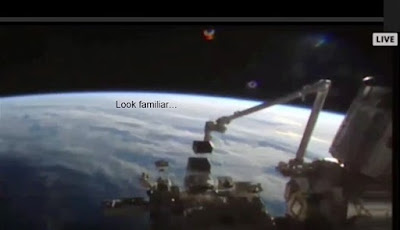
The following six photos are most likely the other moons/planets traveling in Nibiru’s solar system. 

We are seeing now the other orbs in the system, and as they get larger and larger, it means Nibiru is close to its appearance. It was also described that when Nibiru finally makes its appearance it will be suddenly and frightenly so.


Nibiru is described as a fiery Star, the Star of Yaakov, more likely similar to the fiery object (below) with wings (of debris). 

Could this be Nibiru? 

(with tails of damaging debris)


THIS IS NIBIRU ON ITS CIRCUIT 
getting closer every (about) 100 days


You can see how Nibiru twists and turns in its orbit pathway.
compare movement captured in both photos.


Nibiru in an Inbound circuit 
(you can nearly see four offshoots reminding of the “Jacks” 
described by Rabbi Moshe Cordovero in ShiratDevorah here)


Estimable diagram of Nibiru (purple)

in its path around its moon as it makes
its path around our Sun (at its closest
circuits, approximating every 100 days,
there were huge earthquakes on earth)


Big Green planet/moon of the Nibiru system.


The photos and description are by some who have been watching and following sightings in our Atmosphere. They are doing a tremendous job, but of course it is limited by the Creator of all that exists and doesn’t exist in our world, and HE alone guides and propels, as is contained in Benjamin’s Letter above. We will only know Nibiru when it arrives.

"Steve Olson is a researcher, cyber security expert, retired USAF and held a Top Security SBI/SCI Clearance. Mr. Olson brings a blockbuster amount of evidence, pointing to the very real possibility a secondary solar system is on a path that will come close to our own planet, possibly causing cataclysms at a mass scale. Almost two dozen photographs taken from multiple cameras and sources from around the world with the best evidence to date of the infamous Nibiru, Wormwood, Nemesis, Planet X aka Winged Destroyer."

01 November 2016

The Raven and the Dove: A “Real-World” Perspective of Parshas Noah

The Raven and the Dove: A “Real-World” Perspective of Parshas Noah


INTRODUCTION


In the aftermath of the flood, as the waters receded, Noah lifted off the cover of the ark and sent out a raven, which flew in circles (or to and from the ark) until the earth was dry. He subsequently sent a dove to see if the waters had receded – which is odd, since the raven had already stayed that long… or had it? The dove, oddly, could not find a resting place and returned; 7 days later he sent the dove out and she came back at the end of the day with an olive branch in her mouth; 7 days later, he sent the dove out and it never returned.


Bereshis 8:6-14


And it came to pass at the end of forty days, that Noah opened the window of the ark which he had made. 7 And he sent forth a raven, and it went forth to and fro, until the waters were dried up from off the earth. 8 And he sent forth a dove from him, to see if the waters were abated from off the face of the ground.9 But the dove found no rest for the sole of her foot, and she returned unto him to the ark, for the waters were on the face of the whole earth; and he put forth his hand, and took her, and brought her in unto him into the ark. 10 And he stayed yet other seven days; and again he sent forth the dove out of the ark. 11 And the dove came in to him at eventide; and lo in her mouth an olive-leaf freshly plucked; so Noah knew that the waters were abated from off the earth.12 And he stayed yet other seven days; and sent forth the dove; and she returned not again unto him anymore. 13 And it came to pass in the six hundred and first year, in the first month, the first day of the month, the waters were dried up from off the earth; and Noah removed the covering of the ark, and looked, and behold, the face of the ground was dried. 14 And in the second month, on the seven and twentieth day of the month, was the earth dry.


THE MISSIONS: SEQUENCE AND PURPOSE


Scholars, medieval and modern, traditional and “otherwise” have puzzled over this sequence for centuries. The three “missions” of the dove seem to be unusual – after all, if the land was already visible well before Noah sent out the dove the first time, why did it not find any rest? And why did it return after its second voyage – but with an olive branch – and why specifically a branch of an olive tree? And if it was able to gain access to such trees, why did it come back at all – after all, when it was sent the third time and evidently found the water yet lower, it didn’t return.


One parenthetic note about the sequencing problem as it relates to v. 7; it is possible that Noah sent out the raven and he kept circling; while the raven was circling, he began the dove-dispatches, such that the phrase ‘ad y’voshet hamayim me’al ha’aretz (until the waters dried up from the land) may not have happened before the dove was sent. Thus the seeming contradiction between v. 7 and v. 11 is reconciled.


I’d like to put these questions aside for the meanwhile and look at the un- feted bird of Noah’s ark – the raven. What was the purpose of Noah’s sending it out and what could it accomplish that the dove couldn’t do – and vice- versa? What did Noah learn from the raven’s return and why did that cause him to send out the meeker dove?


The history of interpretation of this conundrum is not overly rich; there has always been such a focus on so many other “major” components of the immediate postdiluvian world (the offering, the covenant of the rainbow, the renewed moral code etc.) that the birds in general – and the raven in particular – have been generally overlooked.


Among the moderns, there are some who, predictably, argue for two traditions and see the two birds as two versions of the same; others, going as far back as Philo of Alexandria, have argued that the birds are purely symbolic; the raven representing vice (and, in his version, never returning as it is comfortable in the destroyed world) while the dove represents virtue (hence must return as it cannot bear to live among the remnants of such havoc). (Questions and Answers on Genesis II; 35-39)


A suggestion was recently made that Noah, by sending out the raven, hovering “to and fro” over the water, was reenacting God’s “spirit hovering over the waters in Genesis 1:2. (Moberly, Why Did Noah Send Out A Raven? Vetus Testamentum 50, 3 2000 pp. 345-356)


REEXAMINING THE EVIDENCE – AND ASKING THE “RIGHT” QUESTION


The key to understanding this narrative twist lies in assessing, as best as we can, Noah’s considerations and intentions at this point in the voyage.


First of all, the rain had stopped, which meant that, sooner or later, the earth would be able to begin absorbing the waters and allowing the water level to recede. The ark came to rest when the water receded to the level of the high mountains, thus giving some ground (perhaps still underwater) for the ark to rest. This is detailed in chapter 8:1-4; in v. 5, approximately 70 days pass and the mountain tops are now visible as the waters continue to recede. It is only at that point or sometime later (the reference point of “40 days” in v. 6 is unclear – is it 40 days after the rains ended? 40 days after the mountain tops were visible? 40 days after the ark came to rest?) that Noah opens the window/cover of the ark and sends out the raven, followed by the dove.


What was Noah trying to ascertain by sending out the raven?


Noah had to wonder what life remained – if any – underneath all of that water; on a more immediate level, he wanted to find out how low the water level was at this point.


Noah remembered the beginning of the flood – it wasn’t that long ago. When the torrential rains came and springs opened up, people’s natural instinct would have been to try to survive. Where do people go when there is a flood – regardless if the flood is the result of an over-swelled river or a torrential downpour? They seek higher ground. The upper ground, as high an area as could sustain animal and/or human life, would have been filled with all sorts of mammals for the raven to feast on. Noah was trying to find out if the water level had gone so low as to allow for a habitable place, at which point he could (at least) let the predatory mammals out of the ark, knowing that they would have access to plenty of sustenance. Keep in mind that Noah could not see how far the water had receded from his vantage point – all he saw was the very mountain tops as his ark was grounded at Ararat – so the raven’s behavior would serve him well as an indicator of how low the water had gone down.


The raven continued to circle until “the waters were dried from the land” – meaning, the land that he was sent to explore. When the raven stopped circling and, presumably, disappeared from view, Noah could safely assume that habitable areas were now exposed and not water-logged. However, that would not help the great herbivore population on the ark – nor would it help the humans who were only permitted meat after leaving the ark.


His next step was to send out a dove, who would not be able to rest until it found a tree with branches appropriate for resting – in other words, the tree-line for nesting trees (which are typically low) would be visible. Since the dove could not find any rest, Noah understood that the broad world of vegetation, needed by so much of his mammalian cargo, was not yet accessible.


He then sent the dove a second time, and it returned that same day (at evening) with an olive branch in its mouth. This was quite informative, as Noah now knew several critical things that would help him in assessing how to restart life on earth. He knew that low trees (an olive tree, while it can grow in mountainous areas, is typically under 50 feet tall) were now visible and that they hadn’t been destroyed by the flood – a most vital piece of data. Secondly, he now knew that that level was visible – but he also understood something else. If the dove returned to him so quickly – or at all – it meant that the dove could not find a proper place to nest. Why couldn’t the dove nest on that olive tree? Simply put – birds build nests from twigs on the ground. The final test of human an herbivorous mammal viability would be to see if the ground was exposed and dry – dry enough that twigs could be used to make a nest.


One week later, Noah got his answer – the dove went out for a third time and evidently was able to build a nest, as she never returned. At that point, Noah was ready to open up the ark, as all of the cargo – human and “animal” – now had access to habitable areas and vegetation.


AFTERWORD


It is vital to view the narrative from a “real-world” perspective, remembering that the characters only know what they know and that the various questions posed, observations made and tests passed (or not) may be designed to further the actor’s grasp of the situation. We find ourselves at the disadvantage of having read the story so many times that, in this instance (for example) we already know that the earth is completely dry (well, at least by the end of the narrative). We have to sensitize ourselves to the reality that Noah doesn’t know that – to anticipate the questions in his mind and view his actions in that light – as intelligent and thoughtful attempts to give him the information necessary to move forward.


Text Copyright © 2014 by Rabbi Yitzchak Etshalom and Torah.org. The author is Educational Coordinator of the Jewish Studies Institute of the Yeshiva of Los Angeles.

The picture is a copy of an etching by Marc Chagall taken from the web

30 October 2016

What Went Wrong . . .

Before we end up on the Ark with Noach and his children, there are still some voices to be heard about Parshas Bereshis. Honestly, all our troubles come from this "Yom HaShishi". “HaShishi” itself, refers to the 6th of Sivan, Shavuos, when WE were given the Torah – Heaven’s antidote to the "Yom HaShishi” of Creation.

The following is from Rabbi Pinchas Winston, Shlit”a, Perceptions on Bereshis:

[…] The secular world appears very, very, exciting for an observant Jew for whom Torah seems very, very boring.

Consequently, the Internet and everything associated with it has come under fierce attack in the Torah world. A tremendous amount of energy and resources are being poured into the curtailment of Internet by Torah advocates, because it is an easy and affordable portal to so much that the Torah forbids.


Furthermore, the Internet also allows such dubious activities to transpire anonymously. This removes a hurdle of personal shame that often acted as a last chance gate-locker for someone with still an ounce of fear of God. Smart phones only magnify this problem.


To some, the response seems paranoiac. They probably just haven’t heard the horror stories that have occurred as a direct result of Internet access. It’s not just about children, so many who have been damaged for life, but about adults as well. The Internet or Internet-related activities are the reason for many family break-ups, for reasons that once did not apply to members of the Torah world.


All of a sudden, finding a better way to share the excitement of Torah to stave off intrusion from a very secular and enticing world has become secondary to dealing with the problem of the Internet. It’s like worrying about the ship’s entertainment program when the ship itself has sprung a major leak. All the community’s focus must first, by necessity, be on “plugging the hole.”


The community’s focus may not be on the central problem, but the focus of this week’s Perceptions will be.


To begin with, there may not be a nation-wide solution to the problem, at least until exile ends. Contrary to what it may seem like, we are a nation in exile. Even worse, the Shechinah is in exile, suffering every moment that a mosque squats on its rightful place, and its people are spread throughout the world.


When Pharaoh began to bathe in the blood of Jewish babies, we cried hard enough to end the exile. The problems facing the Jewish people are having a similar impact. It is helping us to realize that we need God to end this exile and solve our spiritual problems through redemption.


Until such time, it is still possible to discuss what it is that is missing from the Torah world to deal with the issue of making Torah come alive for disinterested Jews. It is still relevant to discuss the building of some kind of educational bridge between where we are now and where we ought to be. It is the first step towards actually building such a bridge.


Warning: This is a two-part discussion. It will start this week and finish next week, b”H, in time for Parashas Lech-Lecha. This is because it is not a topic that has become relevant only because of the challenges of modern society. It is because it has been and is the challenge in every society since man first walked the face of the earth, all that way back to the Garden of Eden.

Think about it for a moment. What did the snake offer Chava that tempted her away from God’s way to his way?


The snake said to the woman, “You will surely not die. For God knows that on the day that you eat from it, your eyes will be opened, and you will be like angels, knowing good and evil.” (Bereishis 3:2-3)

This may cause many to yawn today and say, “That’s it? That’s the best you can offer? You want me to violate the will of God for only THAT?” This was not Chava’s reaction, though. On her very high spiritual level, smart phones and Internet would not have spoken to her. This did, as the Torah reports:


The woman saw that the tree was good for food and that it was a delight to the eyes, and the tree was desirable to make one wise. (Bereishis 3:4-5)

Before proceeding, let us recall that Chava, and then Adam, passed up the the Tree of Life, a.k.a., Torah, to eat from the Tree of Knowledge of Good and Evil. Even though the Tree of Life promised immortality, and the Tree of Knowledge of Good and Evil had a death sentence attached to it, they chose the latter. They risked everything for a “bite” of the Aitz HaDa’as.


The pull was that strong, that blinding, that intoxicating.


What went wrong?


It has to do with inverted realities. Adam and Chava were already living in Paradise. Yet, the snake, which is really the yetzer hara, was able to convince Chava that real Paradise was a bite away. They had the real Paradise, and yet they chose the fake one. How could that happen?


Ayekah—Aleph-Yud-Chof-Heh? Well, how could the Jewish people have a Temple and do that which caused its destruction? Eichah—Aleph-Yud- Chof-Heh?

The Ohr HaChaim provided an important insight that explains all of human history and its spiritually destructive nature. Simply, the fruit of the Tree of Life was the bark itself, something you could not know until eating it. The fruit of the Tree of Knowledge of Good and Evil was apparent, and attractive, just by looking at it.


This was not a coincidence. It was designed this way. God made the Tree of Knowledge look more attractive than the Tree of Life so that a person would choose it only after checking into it, not from a distance. He wanted, WANTS, a person to come to Torah because it is true, not because it is fun. God wants people to pursue Torah as part of a pursuit of the ultimate pleasure in life, not for a temporal thrill often associated with the pleasures of this world.


Anyone who has truly tasted the “bark” of Torah knows that it is more than worth it. Once “inside,” it is not difficult to stay there, even in a world as materially exciting as the one in which we live. Helping someone enter that level of Torah life is another story, one that Adam HaRishon apparently failed at. It is also one which the Torah world struggles with as more and more religious Jews leave the fold, in part or completely, for the excitement of secular life.


What can be done […]?


To be continued next week.

Some Recent Signs

November to bring 15 days of DARKNESS – 'shock NASA claims'
NEXT month the world will be plunged into darkness for more than two weeks, according to shock claims. (DailyStar)
Rumours are circulating online that American space agency NASA leaked news that between November 15 and 29, the Earth will be pitch black. According to website Dinos Mark, which reported on the far-fetched claims, the apocalyptic event will be caused by an “astronomical event between Venus and Jupiter”. It goes on: “According to the [NASA] report, Venus and Jupiter will engaged in a close parallelism, only being separated by one degree.” BLUE: The Sun will apparently heat up and turn completely blue

[me: we’ll have to wait and see about this prediction]


Focus your eyes on the image near the top center, the RED one with WINGS:


PHOTOS FROM NEW SOUTH WALES, AUSTRALIA


Walmart Hit by Meteor Starts FIRE:


ALL OF THE ABOVE AND OTHER SIGHTINGS POSTED ON THIS BLOG COME FROM A RELIABLE SOURCE, STEVE OLSON’s YouTube COMPENDIUM OF PHOTOS AND VIDEOS SENT IN BY OBSERVERS FROM ALL OVER THE US AND THE REST OF THE COUNTRIES OF THE WORLD. SOON HE WILL HAVE A WEBSITE UP DEDICATED TO THE PHENOMENA THAT HAVE ENTERED OUR SOLAR SYSTEM, NIBIRU AND ITS CAST OF PLANETS AND MOONS.


29 October 2016

A GLIMPSE INTO THE GEULA


The Genesis of Israel’s Next Economic and Moral Transformation
By YOSEF I. ABRAMOWITZ JPost 10/27/2016

Next level growth and impact will come from harnessing Israel’s and the Jewish people’s values and scaling companies that can advance the dignity of life for the billions of people.

Israel’s miraculous transformation from an agricultural economy to an industrial and then digital one is poised for another inspired leap forward. The genesis of this impending economic metamorphosis is hidden amid the creation story and can reignite a Jewish sense of mission in the world.

Again we roll back the Torah scroll, and celebrate creation and the creation process. 

Turning back time, we find the blueprint for our future.

The drivers up until now for the Start- Up Nation have been the military, research universities, immigrants, culture of challenging authority, and the smallness of our domestic market that forces new businesses to think globally. Yet Judaism itself rarely gets credit or is tapped, even though it has existed for thousands of years before our Third Commonwealth and the Jewish people has always represented a unique, creative, and entrepreneurial spark.

Mark Twain’s summary in Harper’s of the Jewish people’s curious ability to achieve across a wide spectrum of fields came out 100 years before Waze and Iron Dome and 50 years before Israel’s Independence. The Jews’ “contributions to the world’s list of great names in literature, science, art, music, finance, medicine, and abstruse learning are also way out of proportion to the weakness of [their] numbers,” wrote the celebrated author.

Just this week, the World Economic Forum released its annual survey of the planet’s most innovative nations and little Israel came in second. Last year, in a similar study on clean-tech, little Israel led the world. Israel once in a while scores a Nobel Prize, but every year Nobels are awarded to Jews – even if Bob Dylan is a no-show at the ceremony.

Imagine if Judaism and the global Jewish community could super-charge the Start-Up Nation – this is the new frontier. 

A Start-Up Nation with a purpose

With a boost from Judaism’s disruptive role in history and our appreciation for Genesis, the 4,000 start-ups in Israel can be seen as acts of creation, with a large number receiving angel funding from Jews around the world. Every Israeli and nearly every Jew knows the story of creation; it is our mythic angel round.

G–d, the single-actor entrepreneur in Genesis, makes things happen, with a series of simple and replicable verbs.

And only after G–d declares at each stage that “it is good,” that G–d taps a team for the most difficult and final act of creation: humanity. “Let us make Man in our image, (Genesis 1:27),” the Ultimate Entrepreneur announces to the team, largely attributed by commentators to be angels.

This process is repeated across the cafes and incubators all over Israel every day. A coffee shop culture of cooking up ideas in discussions, creating ideas out of nothing, creating companies out of seeing the world in a different way; of differentiating our ideas from existing ones; taking the risk and just doing it; and making it through the seed round.

And then, when the groundwork has been prepared to go global, you need to build a team, whose purpose is to replicate and scale (be fruitful and multiply) and conquer the global market.

There are more than a billion people without access to clean water, 2 billion without access to electricity or burning dirty and expensive diesel fuel, and about a billion people suffering from hunger insecurity.

The rabbis debate what is the most important Jewish teaching and there is a battle between the Golden Rule and in whose image we are all made. The Golden Rule loses. 

Note the majesty, and repetition, in Genesis 1:27: 

“And G–d created man in G–d’s image; in G–d’s image G–d created man; male and female G–d created them.”

Water, energy and food – these are the necessary building blocks for human life and therefore for affirming G–d’s image, and these three pillars of life grace this week’s Torah portion. G–d’s spirit hovers over the waters (1:2), light is created (1:3), and all manner of vegetation is provided for humanity to eat (1:29).

I propose that the next phase of Israel’s economic development be in the industries that advance and affirm G–d’s image. In doing so, Israel can become a superpower of goodness in the world.

I had the privilege to accompany Prime Minister Binyamin Netanyahu not only on his historic visit to East Africa, but also recently to the United Nations, where we presented, along with a handful of other companies, what Israel can do to advance development in Africa.

It was enthralling to see Israeli companies produce miracles: pulling water out of thin air, advancing painless male circumcision as an anti-AIDS strategy, growing a garden in a box without soil, and taking the energy from the illumination in the sky from the fourth day of creation and enable it to power a nation, to power development.

Golda Meir said in 1975, “The truth is that we did what we did in Africa not because it was just a policy of enlightened self-interest, but because it was a continuation of our own most valued traditions and an expression of our own deepest historical instincts.”

The exits and IPOs of new Israeli companies will continue because the engines of innovation in Israeli society are strong. But next level growth and impact will come from harnessing Israel’s and the Jewish people’s values and scaling companies that can advance the dignity of life for the billions of people who are hungry, thirsty and seeking God’s renewable light to shine upon them from Zion.


Yosef I. Abramowitz is CEO of 
Energiya Global Capital. 
He can be followed @KaptainSunshine

28 October 2016

Recent Post of Meir Ettinger - ואשר חרב גאוותך

ואשר חרב גאוותך
כ"ה תשרי התשע"ז 27.10.2016 10:28

בעקבות כתבי האישום על החתונה - לצאת ממגננה ולהפנות אצבע מאשימה לאחראיים לרצח 
עשרות היהודים בשנה האחרונה • הבלוג של מאיר אטינגר
בעקבות כתבי האישום על הריקודים בחתונת משפ' אשבל נזכרתי בפסוק שקראנו בחג. העוז והגאווה היהודית הם שיסחפו את העם לחולל מהפכה אמיתית ושמחה.

השבוע התבשרנו ש'סוף סוף' הוגשו כתבי אישום על הריקודים בחתונה המפורסמת במדינה, זו יכולה להיות גם הזדמנות לסגור חשבון עם ההסתה התקשורתית והתמיכה בטרור הפוליטי של השב"כ, להיחלץ מעמדת המגננה שנדמה ונכנסנו אליה, ולהחזיר לדוכן הנאשמים את האשמים במותם של 37 היהודים שנרצחו בשנה האחרונה, מאז ראש השנה אשתקד. (בדיוק שבוע אחרי ששר הביטחון לשעבר הכריז על מיגור "הטרור" – היהודי, מתי יעשו מחקר האם יש קשר בין הדברים?).

כתב האישום הזה מציג בצורה הכי בוטה את עומק השנאה הכבושה והטירוף של אנשי ה"נאורות" כלפי כל יהדות שיוצאת מתחומי בית המדרש ופורצת את גבולות 'תחום המושב' שבו מותר לדת להתגורר.

כידוע, גם לפי החוקים המעוותים והנאלחים של מדינת ישראל אין כל הסתה בתפילה לכך שיישרף המסגד, כמו שגם אין הסתה בתפילה "לעשות בהם משפט כתוב – הדר הוא לכל חסידיו", או "וכל הזדים כרגע יאבדו" הנאמרות כל יום.

> הירשם עכשיו ותקבל את הכותרות החשובות למייל האישי! <

אבל כיאה לחוקי בשר ודם איש במדינת ישראל לא מכבד את החוק ובוודאי שלא נציגי הפרקליטות או התקשורת, כך שהחוק מתעצב כפלסטלינה בידיהם של "אנשי החוק", והכל כדי לטשטש את הזהות היהודית בכל דרך ובכל מחיר.

ממילא, אין מנוס מלהתייצב כנגדם "בגאווה ובוז" דקדושה, שהרי לא עניין של חוק יש כאן אלא מלחמת תרבות שמאיימת על המאוויים ועל התפילות שלנו, על עצם חיינו ועל נקודת יהדותנו.

ב. על גאוותם של ישראל

כשקוראים בתהלים פסוקים כמו "ישמח צדיק כי חזה נקם, פעמיו ירחץ בדם הרשע" או כמו הפסוק החותם את שירת האזינו "הרנינו גויים עמו כי דם עבדיו יקום", אפשר להרים גבה - האם זוהי שמחת הצדיק? האם בכך מתפארים עם ישראל בשמחת הנקמה? לכאורה, גם כאשר אנחנו נאלצים להחזיר מנה אחת אפיים לאויבינו זהו אילוץ ו"ההכרח לא יגונה", אך מדוע הפסוק עושה מזה שמחה ורננה?

השורש נ.ק.מ המופיע בשני הפסוקים הנ"ל קשור למילה תקומה ולזקיפת הקומה שבאה אחרי הנפילה או ההתפלשות בעפר. את תחושת השמחה בעת התקומה יוכל להבין רק מי שהרגיש בליבו את כאב הנפילה והריחוק.

מי שלא מאמין בבחירתו של עם ישראל או מי שלא מבין את גודל התפקיד של העם היהודי ושל המדינה היהודית, לא יבין את הכאב והבכי "על גאוותם של ישראל שניטלה מהם וניתנה לאומות העולם", את גודל תחושת ההשפלה כשהמדינה היהודית מתנהלת ככל הגויים ולעיתים גם למטה מזה, הוא בטח לא יבין את השאיפה והתביעה לזקיפת הקומה, בעיניו מדובר בחילול ה' לכל היותר.

דווקא מי שהלב היהודי שלו חי וער, שמאמין בכוחו של העם הזה להביא את השלום האמיתי לכל העולם, ירגיש את חילול ה' היום יומי בכל תנועה ותנועה של הממסד הכל כך זר. אדם כזה שבליבו בוער בכל רגע הדחף להחזיר את הכבוד היהודי, לזקוף את הקומה של ישראל. בכלל לא מוזרה לו אותה שמחת הצדיק המתוארת בפסוקי התהילים, שמחה על כל רגע של זקיפת קומה, על כל זיק של תקווה יהודית שמבשר שיש תקווה, ושאולי סוף סוף יחזור בן המלך מהשביה.

ומכאן נחזור קצת למעשה. כתב האישום הזה הוא חלק מהמאמץ הבלתי נלאה של אנשי הממסד למגר את ה"קיצוניים" האלו. משל למה הדבר דומה? לאדם שמנסה לעקור משדהו את כל ה"עשבים השוטים" ולא מצליח להבין כיצד הם צומחים בכל פעם מחדש.

ארץ ישראל מצמיחה כל הזמן מחדש את הגעגועים והכיסופים לתקומה כזו שתכסה ותנחם על חרפת הגלות, את השאיפה למדינה יהודית שתהיה כזו שנרגיש בה 'נקמה מתוקה' כזו שהיה שווה לשלם עליה את המחיר של שנות הגלות. גם כשמנסים לגדוע געגועים ושאיפות כאלו הם לא מפסיקים לצמוח.

מעשי הבריונות של הממסד יוכלו כדרכם של בריונים לכל היותר לגדוע לנו את הידיים והרגליים, אבל הלב לא יפסיק לפעום. ולכן גם את תחושת ההשפלה וחילול ה' ומצד שני את התקווה התפילה והשמחה לכל הארה של גאווה יהודית אי אפשר למחוק. ולא יועילו לזה חינוך מחדש, בריונות או טרור תקשורתי.

התקווה בת שנות אלפיים לחידוש עבודת המקדש – כן, כן, כן, במקום המבנה העומד שם כיום, היא לא תקווה שאפשר למחות אותה בין רגע בכתבי אישום ובליצנות תקשורתית, היא תקווה שהולכת ומעמיקה ובכל יום רק מתחדד הצורך במהפכה אמיתית שורשית תקיפה ואמיצה, שתהיה כמה שיותר בגאווה ובזקיפת קומה.

וגם בפועל ממש – ניתן לראות כיצד דווקא לאור הרדיפות, העינויים, המעצרים והטרור התקשורתי רק מעמיקה אצל היהודים הדרישה לזקיפת קומה, החום היהודי גובר והולך ואת האש הזאת גם מים רבים לא יכולים לכבות.

ב. כבוד ארץ ישראל

מכיוון שבהתחלה רציתי לכתוב בעניין עמונה, לנסות לחשוב מה אנחנו יכולים לעשות בתוך כל הפוליטיקה, וכל המעורבים בדבר, אז תכל'ס הסיפור של עמונה הוא בדיוק אותו סיפור.

בכל הפתרונות שהוצעו על ידי כל הנוגעים בדבר, בין אלו שכוונותיהם לטובה ובין אלו שהרבה פחות העיקר חסר מן הספר, כי העיקר הוא לא גורלם של המשפחות (עם על הכאב) ולא עתידה של הגבעה (שכידוע תישאר בידים יהודיות) אלא כבוד ארץ ישראל וכבוד העם, זה מה שהניע אלפים לעלות לעמונה בסוכות למרות שכולם לא מעיזים להגיד שמה שהם רוצים זה דווקא את התעוזה ואת העוז.

כל פיתרון או הסכם בין אם יעתיק את עמונה ובין אם עמונה תישאר על ההר, לא יכסה על הביזיון של עצם הדיון, הביזיון על חילול כבודה של הארץ כשנציגי העם ממרץ ועד הבית היהודי לא מסוגלים להגיד שזו ארצנו.

קשר יציב בין עם ישראל לארץ ישראל הוא קשר של אהבה, לכן הוא משול לקשר בין איש לאשה "כי יבעל בחור בתולה יבעלוך בנייך" (ישעיה סב) אהבה בוערת כרשפי אש שכאשר יש מי הקורא תיגר על קשר זה היא הופכת לרוח קנאה דקדושה.

בלי זה המאבק נתפס כמאבק אינטרסנטי שרק מפריע ומכביד על חיינו, ולאט לאט הציבור מתעייף מהמאבקים החוזרים ונשנים שאינם נושאים איתם בשורה של פריצת דרך והתקדמות. רק מאבק שיהפוך למאבק של התחדשות ובשורה יוכל – ובגדול – לסחוף אלפים ורבבות..

מאבק אמיתי על עמונה צריך להתמקד בהרמת דגל הגאווה היהודית בזכות שלנו על הארץ, בהקמת עוד לפחות שני מאחזים סביבות עמונה. ועוד יותר בהבנה שאחרי כל כך הרבה השפלות, גלות וגלותיות רק מדינה יהודית באמת שתזקוף את הקומה של ישראל תהיה פתרון אמיתי וסביר.

הדרך האמיתית לחולל מהפכה היא רק מתוך עזות דקדושה וגאווה, לא להתפשר ולדרוש הנהגה כזו שתשיב לנו את "גאון עוזנו" או כמו שקראנו בשמחת התורה בפסוק שחותם את דבריו של משה בספר משנה תורה "אשריך ישראל מי כמוך, עם נושע בה', ואשר חרב גאוותך".

27 October 2016

The Abarbanel on Parshas Bereishis

Parshas Bereishis
By Rabbi Dr. Meir Tamari


DON YITZCHAK ABARBANEL
DIPLOMAT, FINANCIER, MYSTIC
A TORAH SCHOLAR FOR OUR OPEN SOCIETY

INTRODUCTION

This Torah scholar, diplomat, financier, mystic and leader of his people, although living some 5 centuries ago, is particularly pertinent to the modern open society and global village in which we live, in a way that no other scholar seems to be. He is probably the last person to combine within his person 4 major and long existent Jewish traditions; philosopher, states-man, torah scholarship and cabbalist. His commentary on the Torah seems particularly suitable to those of us who earn our livelihoods, engage in business or professions and willy-nilly are confronted with the challenges of living globally, for the first time since his period, in free societies.

Faced with the challenges inherent in the cultural and religious free market of his time ­ 15th century Spain, his knowledge of Torah, philosophy, both Jewish and that of classical Greece and European Renaissance, and mystical sources, he presents a commentary suitable to us living in a similar assimilatory prone, open and spiritually free society. As a scion of traumatic Jewish expulsion, persecution and suffering, his ideas of galut, redemption and messianism are extremely relevant to our post holocaust generation.

Adopting a special Socratic style of detailed questions and answers, he produces a commentary on the Chumash and the Nach that is familiar and convenient for us trained as we are, knowingly or unknowingly, in Greek methods of thought and those of science and technology. Furthermore, he constantly refers to the classical commentators who preceded him- Rashi, Rambam, Ibn Ezrah, Ralbag and Ramban, but has a different perspective. 

BIOGRAPHY

He was born in Lisbon, Portugal, in 1437, into a family descended from King David that ranked in the forefront of the Jews of the Iberian Peninsula. They were distinguished by their financial, political and Jewish communal leadership achievements.

In addition they were known as a family that loved scholarship, and piety, and had strong moral convictions. All these as well as their commercial and financial strengths Don Yitzchak inherited. Then in 1483, with the ascension of the anti Semitic king Joao, he was forced to flee to Spain, where he re-established himself till the expulsion of Spanish Jewry in 1492. Ultimately he made his way to Italy, where he lived in Naples and Venice till his death in 1508.

In addition to his commentary on the whole Tanach, he wrote commentaries on Pirkei Avot and the Pesach Haggadah, and a trilogy, Mayanot Hayeshua, Mevaser Hayeshua and Yeshuat Messicho – his great work on Galut and Redemption.
Parshat Bereishit.

It is fascinating to find in this scholar, some 400 years before Darwin, a sort of Darwinism when he discusses the sequence of the creatures created during the 6 days of creation. He too points out the progression from the simple to the most complicated and developed form of life, but in contrast to the Darwinists, he sees this progression not as merely physical and determined by the survival of the fittest but primarily spiritual in nature and importance, decreed by Divine Will.

The inanimate things in G-d’s world are spiritually at the lowest level, having neither life nor ability to act on their own. Fishes and birds, the physically simplest and least developed species of the living world, are at a higher spiritual and religious level than the inanimate yet are spiritually the weakest of that world. Apart from anything else, they can only reproduce by means of the hatching of eggs, a mechanical and disinterested process. In contrast, in the mammals including Adam, the continuation of the species is through the actual body of the female, an indication of a certain nobility flowing from feelings, creativity and relationships.

An indication of the spirituality attached to this ability to reproduce a continuation of the species that is a replica of the species is shown by Abarbanel when he comments on the naming of Adam’s first born. 

The text makes it clear that the naming of Cain was done by Chava who said, ”kaniti” [from the root to acquire or to take possession] a man with the help of the Lord” (Bereishit, 4:1). 

She herself had been formed by G-d from Adam, however, she, together with the Lord, had created this son. Despite this, of all the other parts of Creation the text says, “let the Earth bring forth” whereas regarding Adam the Torah says, “And G-d said, 'Let us make Man’ or 'G-d created Man''”, thus demonstrating a closer and special relationship between him and Hashem, that is radically different qualitatively and spiritually from the rest of creation. Adam alone had elements of the heavenly beings and of divinity. 

So his creation was a special and constructive act rather than something mechanically called forth from the earth and this despite his being taken from the Adamah and his common source with the rest of the creation. Nevertheless, there is no special day set aside for his creation as befits one who is created in G-d’s image, otherwise Adam would have thought that he was a god. So Adam was created on the 6th day together with all the other animals and beasts, who like him, procreate their species. This is further strengthened by the text using the phrase 'kedmuteinu’ 'after our likeness’ but not in our likeness (Bereishit.I: 26).

However, in addition to his earthy source, Adam also had the intelligence, wisdom and understanding that, being of Divinity, is lacking in the other beings. Above all, Mankind alone has the free will to choose between good and evil that is the hallmark of the image of G-d.

The duality that Abarbanel speaks of does not mean the existence of two competitive natures, destined to struggle against each other, but rather a balance whereby the divinity gives Adam free will so that the earthy can be educated and refined; this is the distinguishing mark of Mankind. 

Abarbanel’s answer to 2 questions regarding the Generations of Heaven and Earth (Bereishit 2: 4), can serve as an example to his method of commentary as well as this concept of a balance between the earthy and the heavenly dualism in Mankind.

”And Adam became a '€˜nefesh chaya'” (Ber.2: 7). Abarbanel questions all of the commentators who see in the term; 'nefesh chaya’ a reference to some sublime characteristic of Man, whether having the power of speech (Onkelos), the soul as evidence of his spiritual nature (Ibn Ezra), the sum total of his intellectual-spiritual-rational nature (Guide to the Perplexed) or the superiority of the soul of Man over the soul of the animal who are also referred to as '€˜nefesh chaya’ (Rashi). 

In contrast Abarbanel sees this verse as expressing the common source that Man has with the animals, that guides him unless he is able to use his spiritual wisdom to guide his free choice. This idea is supported by the verse, “Man is glorious but if he does not understand, he is likened to the animals that perish” (Tehilim, 49:21), or “Because of the sons of Man that G-d may sift them that they may see that they are but as beasts” (Koheleth, 3:18). That is why Nefesh Chaya is followed by the creation of Gan Eden.

Abarbanel questions why the Torah tells us that there was no rain before Adam was created on the 6th day, so that there was no growth of plants ad trees, even though we were told that these were created on the 3rd day. He rejects Rashi’s comment that this is because before Adam there was nobody who could thank G-d for the rain. Surely the whole of creation including the trees, shrubs and flowers would have been thankful for the rain so that they could have grown without Adam? 

So he explains that then they could only flourish and grow by the virtue of the nature inherent in them; this would similarly apply to the animal nature of Man. However, Adam was created from the mixture of earth with the rain that came from heaven; a mixture that enables him and through him the rest of creation to grow and develop according to the Divine Will. 

Gan Eden was then created to emphasize for Adam that the penalty for transgressing that Divine Will was a return to the dust from which he was formed – a return to the non-growth that existed before that mixture of earthiness and spirituality from which Adam was created.

_________________________________


Text Copyright © 2004 by Rabbi Meir Tamari and Torah.org. Dr. Tamari is a renowned economist, Jewish scholar, and founder of the Center For Business Ethics (www.besr.org) in Jerusalem
__________________________________

Bereishit and Allegory – A Third Way Out of the Torah-Science Conflict?
[with commentary by the Abarbanel]

Is it possible that science and Torah do not conflict, for the simple reason that they do not discuss the same issues? Can we say that science addresses only the physical world, while Torah deals with the metaphysical?


[…] Prof. Zvi Mazeh, an astronomer at Tel Aviv University: “What the Torah did in the first chapter of Bereishit is take the cosmogony that was known to people at that time and, by adding its own elements, convey the message that God is one, responsible for the oppositions one finds in nature, and that all men were created equal. According to chapter one in Bereishit, humanity developed from one man, which means that everyone – from the king to the lowliest slave – is substantially the same. These two revolutions, the theological revolution and the social revolution, the Torah could not have written using Einstein’s equations, quantum theory or Heisenberg’s Uncertainty Principle. Instead, it wrote it using concepts that were known to every intelligent listener at that time. As a result the messages were absorbed. "

[To read more of this interesting article, go to Bereshit and Allegory

20 October 2016

Simchat Beis HaShoeva – "Whoever Never Witnessed the Simchat Beit Hashoeva has Never in his Life seen True Joy."

Simchat Beit Hashoeva at the Yeshiva of Toldos Avrohom Yitzchok in the Meah Shearim


Isaiah 11:3 - “You will say on that day, ‘I thank You, Hashem, for you were angry with me, and now Your wrath has subsided and You have comforted me. Behold, G-d is my salvation; I shall trust and not fear. For G-d is my might and my praise – HaShem! – and He is a salvation for me.’

You can draw water with joy from the spring of salvation. And you will say on that day, ‘Give thanks to Hashem; declare His Name, make His acts known among the peoples; declare that His Name is exalted. Make music for Hashem, for He has acted with grandeur; make this known throughout the world.”

“One of the most joyful celebrations in Israel was the Drawing of the Water during Sukkot. The Sages noted that "Whoever never witnessed the Simchat Beit Hashoeva has never in his life seen true joy." They have left us wonderful descriptions of the scenes that inspire us with longing to witness it once again.


How was the ceremony conducted? A golden container was filled with water drawn from the pools at Siloam in Jerusalem. When the water carriers reached the Water Gate, they blew three notes on the shofar.

On the right side of the ramp leading to the altar, there were two silver bowls, each with a hole shaped like a narrow spout, one wider than the other. One bowl stood to the east and the other to the west. The shapes of the bowls allowed them to be emptied simultaneously. (The wider spouted bowl held wine, which flows more slowly than water.)


As the evenings of the festival approached, the people made their way down to the Court of the Women. There were golden candlesticks, fifty cubits high, with four gold bowls atop them. Four ladders led to the top of each candlestick, and four young kohanim mounted the ladders, holding in their hands large jars of oil which they poured into the golden bowls. Wicks to light the oil were made from worn-out clothing of the kohanim, and when the candlesticks were lit, the light glowed throughout the entire city of Jerusalem.


The greatest Sages and Tzaddikim would participate joyfully in the celebration, performing the most extraordinary feats. Some of them would bear burning torches in their hands while singing Psalms and other praises of G-d. The Levites would play many various musical instruments, including harps, lyres, cymbals, and trumpets as they stood on the fifteen steps which led down from the Court of Women in the Holy Temple.


“Simchat Beit Hashoeva” at the Mercaz Harav Yeshiva in Jerusalem

Two kohanim were stationed at the Upper Gate of the Temple, holding trumpets in their hands. As the roosters crowed the first light of dawn, they blasted their trumpets, and as they ascended the steps, they blew two additional rounds of tekiah’s.

They continued walking until they reached the gate which led to the east, whereupon they turned to face the west and uttered the words: "We belong to G-d and our eyes are turned to G-d."

The Sages relate that when the great Sage, Rabbi Shimon ben Gamliel rejoiced at the water festival, he would juggle with eight lighted torches, tossing them into the air, catching one and then throwing another, so that they never touched each other. He would also prostrate himself on the ground, bend down, doing a head-stand, kiss the ground and draw himself up again, a feat which no one else could do.


The Talmud relates many of these displays of prowess which the Sages performed at the Simchat Beit Hashoeva. They record that Reb Levi used to juggle in the presence of Rabbi Yehuda HaNassi with eight knives. Shmuel would do the same with eight glasses of wine, without spilling any of their contents. Rabbi Abaye would juggle before Rabbi Rabba with eight (or some say, four) eggs.


It is written in the name of Rabbi ben Chanania, "When we used to rejoice at the place of the water-drawing, our eyes saw no sleep." It is explained that the entire day was occupied with holy activities, so that the participants in the Simcha were busy from day to night.


In the morning the sacrifice was brought, followed by prayers, and then an additional sacrifice. Then they would study Torah and eat breakfast. Afternoon prayer was following by the evening sacrifice and then the water-drawing festivities commenced. The celebration of the Simchat Beit Hashoeva continued throughout the entire night, lighting up the city so brilliantly that there was no courtyard in Jerusalem which didn't reflect the light of the great candlesticks which illumined the Festival of the Water-Drawing.”

Article and pictures from several sources