Rav Eliyahu of Vilna zt"l
הרב אליהו בן שלמה זלמן מוילנא זצ"ל
Tishrei 19 , 5558
Known As: Vilna Gaon, Gra
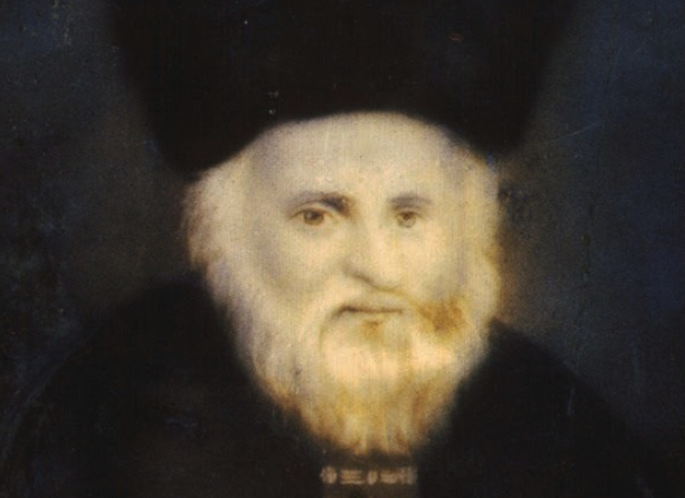
Tishrei 19, 5558 / 1797
Father's Name: Shlomo Zalman
His Father Rav Shlomo Zalman’s Yichus
more by the Gaon of the following titles, at https://nertzaddik.com/tzadik-info/2863/:
Rav Shlomo was the son of Rav Yissacher Ber, son of the pious Rav Eliyahu Chassid. The Vilna Gaon was named after this illustrious great-grandfather. Rav Eliyahu Chassid was the son of Rav Moshe Kramer, AB”D Vilna, and the son-in-law of Rav Pesachya, son of Rav Moshe Ravkash of Vilna who authored Be’er HaGola.
The Vilna Gaon was the bechor in his family. His brothers were: Rav Avrohom Ragaled, author of Maalos HaTorah; Rav Yissacher Ber of Vilna; Rav Meir of Yanishock; Rav Moshe, posek and maggid of Padzeleva near Vilkomir.
At age six, he studied both with a teacher and with his father. By age seven, he studied under the author of Pnei Moshe on the Yerushalmi, and at a young age became both friend and study partner with Rav Aryeh Leib AB”D Tshechnovitz.
At age eleven, on Simchas Torah, he suddenly remembered that he had vowed to complete the tractates of Zevachim and Menachos by the end of the chag, and he had not even begun. So, he sat down and learned both tractates all night long. Rav Michel of Datneve was present and then fell asleep, but he awoke around midnight to find the young Eliyahu going strong, having gotten up to page 50 of Zevachim. Rav Michel, astounded, asked him how he managed to learn 50 pages of Talmud in just two hours! He tested him on a few difficult passages and found the young illui’s understanding to be complete and thorough. The young Eliyahu had fine answers to all his questions.
When Rav Michel returned at dawn, he found that Rav Eliyahu had begun Menachos and had already finished almost half the tractate. He tested him again and blessed him. The Gaon had completed both tractates Zevachim and Menachos before Shacharis. By age 12, the Gra was already aiding those much older than him and even rebbeim in understanding the complex laws of sanctification of the new moon. The Aliyos Eliyahu records that by age eight he had mastered various astronomy texts. His text of Sefer Yetzirah was complete before his bar mitzvah. It is known that at this age he even attempted to create a golem, but, from Heaven, they held him back from doing so (it otherwise seems that might have succeeded!)
He slept no more than two hours a day, and for the duration of 30 years, not longer than 30 minutes at a single stretch. At age 20 he went into self-imposed exile. He wandered from place to place wrapped in tallis and crowned in tefillin. From Berlin, Lisa, and everywhere he went, stories emerged about the Gaon that were wondrous.
Stories about His Self-Imposed Exile
The Vilna Gaon once entered a beis medrash and sat to study there as an unknown guest. He learned for a stretch and then he noticed an old woman approach a holy-looking blind man who sat wrapped in tallis and tefillin. She brought the man a small afternoon meal, and as he ate, he remarked about the melodious voice of a stranger-- a new voice that he did not recognize. “Surely this traveler is a righteous individual. Please invite him to the meal; surely he is hungry and needs to eat.”
The woman invited the Vilna Gaon, but he demurred as he was worried that his hosts would not have enough food for themselves. Realizing his reluctance, the old man explained: “My good wife works at the miller, and there, the flour mill is constantly grinding the wheat. As payment for her services, the owner allows her to collect all the powdered flour that spills over in the mill and so we have plenty and to spare!” The man seemed filled with joy over this, and dined on the gruel made of this flour and water as if it was a great meal.
Afterwards, he invited the Gaon to his home for Shabbos. Again, the Gra hesitated, and again the blind man reassured his guest, “My wife also works at the slaughterhouse and she helps the butcher by plucking all the feathers off the fowl. As payment, he gives her the feet and the head. Therefore, we have plenty of meat for Shabbos, and all the poor are our guests. That Shabbos the Vilna Gaon saw how the old blind man and his elderly wife shared together with their poor guests their Shabbos meal of watery flour gruel with chicken legs and heads. To them, it was like the feast of royalty. All his life, the Vilna Gaon said that he was jealous of the good character and attributes of that elderly couple and how they were happy with their lot, claiming that he wished he was as content as they were.
Another incident induced the Gaon to express the wish that he was as humble as another. During one of his journeys of self-imposed exile, he met a rav of a small town . It was a cold and rainy night and the rav invited the Gaon to sleep at his home. The rav led his guest of undisclosed identity to a comfy bed and covered him with a sheepskin. The Gaon feared that the blanket could be considered shatnez according to a stringent approach in the Rambam and slipped the warm cover off. The rav came to check on his guest and found the cover had slipped off. He covered his guest a second time and went back to his studies. Again, the Gaon slipped off the suspect blanket and again the rav checked on his guest and found him uncovered. “Now please my good man,” the Rav urged, “I want you to be warm! Do try and see that the cover doesn’t slip off; I cannot keep coming to interrupt my learning to cover you again and again.” The Gaon was impressed by the rav’s humility in that he would come back to cover him again and again. Seeing that the rav’s penchant for hachnasas orchim was so strong, he shared the true reason why he removed the blanket explaining why he was that he worried that it was shatnez.
The rav listened and simply brought a different blanket that was less heavy but also less problematic. From this exchange, however, the Gaon’s cover was blown. His explanation of the halachah revealed that he was a Torah scholar. That morning, when the rav sought out his scholarly guest, the Gaon had already left. With his identity revealed, the Gaon fled, but what remained with him always, was the jealousy he felt over the humility that the rav displayed.
In the introduction to Peas Hashulchan, it is told that on his way home he hired a coach and promised the driver to pay him extra for waiting. The Vilna Gaon wished to finish davening the Tefillas Shemoneh Esrei. Yet, while the Gaon stood silently davening, the driver hurried the horses and ran off with all the his possessions. The Gaon came back home empty-handed.
In תק"ה, the Gaon returned to Vilna and studied Torah in poverty and asceticism. He was accustomed to study secluded alone in nature. No one but his wife Chana, the daughter of Rav Yehuda of Kidan, knew where this location was. She saw to it that he was undisturbed, but fed and taken care of. She passed away 5 Kislev תקמ"ג.
The Vilna Gaon authored a number of seforim; the tally among his various students and disciples varies from 55 to some 72 works. Not all of them were printed. The Gaon had the custom to revise seforim with his many glosses and emendations. Rav Chaim of Volozhin testified that before he amended a text of the revealed Torah, such as from Tannaim or Amoraim of the Talmud, he only did so if he first had tested that it agreed with 15-20 sugyos. In amending the hidden Torah, he only made changes where he found no less than 150 sound reasons for doing so.
Among the students mentioned below, was Rav Yisroel of Shklov, author of Tekalin Chaditin, Peas Hashulchan, and Nachla Umenucha. Rav Yisroel served and studied under the Gaon for half a year and was with him for the final 20 days before Rav Eliyahu’s passing. Rav Binyomin and Rav Yisroel of Shklov who prepared and published the Vilna Gaon’s commentaries on the following works: Shulchan Aruch; Orach Chaim; Yore Deah; Mishnas Eliyahu; glosses on tractate Shekalim (Rav Yisroel); a commentary to Pirkei Avos; emendations to the text of the minor tractates prepared by Rav Menachem Mendel of Shklov, the sefer, Tzuras Haaretz V’tavnis Habayid --also by the Rav Menachem Mendel; a commentary to the Pesach Haggadah; and Sefer Yetzirah by Rav Menachem Mendel of Shklov as well.
Rav Meir of Vilna also studied several years under the Gaon and authored a commentary called Eliyahu Rabba based on what he heard and learned on mishnayos Seder Taharos. It is known that whatever the Gaon taught in Taharos was only after he clarified that it was true according to the secrets of Torah as well.
In תקנ"א, when he was advanced in age, the Gra grew ill. Instead of going to doctors, he turned to the famed Dubno Maggid for help through the agency of the Maggid’s insightful stories and parables.
In תקנ"ד, at age 74, Russian soldiers attacked Vilna. They surrounded the city intending to capture the city from the Poles, and on the 21st of Tammuz, around thirty Jews lost their lives to the gunfire of the invaders. On Tu b’Av the fighting intensified, and when the sounds of battle grew near, the Jews fled. Men women and children congregated together for safety in the Great Synagogue. The Vilna Gaon approached the bimah, opened the doors of the aron kodesh and recited Tehillim, chapter 20: “Hashem save us during troubled times” seven times. Suddenly, a loud blast was heard and the gathered Jews were stunned when a direct hit was made onto the roof of the shul. The Gaon cried out, “Batel! Batel!” The bomb failed to explode and even after quiet returned to the city the shell remained there on the roof as a sign of the miracle.
In תקנ"ו, he again took ill and called the Dubno Maggid and once more was healed. In תקנ"ח, on the eve of Yom Kippur he called his children and grandchildren to his side and blessed them one last time. As Sukkos approached, he gathered his strength despite the severity of his illness, so that by the second and third days of Chol Hamoed Sukkos he was still able to fulfill the mitzvos of lulav and esrog with great fervor and simchah. It is believed that the Gaon passed away on the 19th of Tishrei at age seventy-eight while still holding the arba minim in his holy hands. (Summary based on Ruach Eliyahu)


No comments:
Post a Comment