PLEASE USE A NAME WHEN COMMENTING

18 July 2016

Public Service Announcement – Regavim Radio Special

Regavim to host world-renowned radio personality Nachum Segal

On Wednesday July 20th, Regavim's Israel offices will be converted into a state-of-the-art radio studio as legendary host Nachum Segal will be in town broadcasting his popular JM in the AM show LIVE to a global listening audience.


Segal has been the host of JM in the AM, Jewish Moments in the Morning, since September, 1983. The Nachum Segal Network was launched in September 2012, determined to provide quality original programming to an international audience in the same format as Segal's successful morning radio program. The network combines Jewish music and talk that is entertaining, innovative and informative.

The July 20th program will offer JM in the AM listeners the opportunity to learn about Regavim's important activities in Israel - from the North of the country to the South, and all points in between, in order to safeguard state lands.

Some of the guests on this special broadcast will include:
MK Betzalel Smotrich - MK with the Jewish Home Party, and founder of Regavim
MK Sharren Haskel of the Likud Party
Mr. Josh Hasten International Director For Regavim
Mr. Jeff Daube – Director ZOA Israel
Mr. Elie Pieprz – Director of International Affairs for the Yesha Council
and many others!

The show will air live from 1:00-4:00 PM Israel time, or 6:00-9:00 AM US East Coast time.

To listen live In NY/NJ -- tune in to 91.1,90.1,91.9FM

and around the World -- www.nachumsegal.com or on the NSN app for iPhone and Android


. . . . . . . . . . . . . . . . .
Personal reflection: I used to listen to Nachum back in 1983 and for many years. He was just a ‘kid’ then doing his best to entertain with music and Malcolm Hoenlein interviews. At some point, he began visiting Israel during the summer months, and broadcasting from Israel – bringing interesting info to his listeners. B”H He is now a grey-bearded broadcaster, doing his stuff.

Ashrei Hashem Beisecha . . .

Ashrei Hashem Beisecha . . . 
by Rabbi Avigdor Miller zt”l


384. The word “worlds” (Olamim) denotes three categories of time:

1) This world and the world of the souls; 

2) this world and the worlds of Moshiach, and later of the Revival of the Dead; 

3) this world of the present, this world in the past, and this world in the future.

The Kingdom of Hashem is the order par excellence which is set up for the benefit of Mankind, like the earthly kingdom which maintains law and order. Here it is stated that this order is not limited to any period of time so that it is not linked to the past or to the future; but it is an order “of all the worlds” and forever, including Time in all its categories.

The deep plan of the Creator continues with purposeful unity from the creation of the Universe; because from the beginning it was arranged how all successive eras would be conducted in all events and all details, like a long chain composed of many links, each connected with the foregoing and with the following.

Thus all the affairs of this world are linked to the life of the world of Souls in the Afterlife, and both are linked to the days of the Moshiach and to the Revival of the Dead.

For example: “There is no mitzvah written in the Torah with a promised reward, on which the Revival of the Dead is not dependent” (Kiddushin 39B).

The precept of sending away the mother-bird (which is an example of such a mitzvah – ibid), when it presents itself to a man, was due to the previously-made nest and to the previously-prepared birds and the previously-prepared tree. But the materials and instinct which caused the nest, and the birds and the tree: all resulted from the beginning of Creation by deep plan so that they be presented to a certain person at a certain future time, or to other men at other foreordained times, in order to award them with the merit of arising at the Revival of the Dead (see 460).

385. AND YOUR RULE IS IN EVERY GENERATION AND GENERATION. Here he speaks of the generations of men. Each generation differs in its spiritual and physical circumstances from the previous generations and from the following ones, and their conduct varies.

There is no comparison between the generations before the Flood and those afterward,

and there is no comparison of the generations before the Tower of Bavel to those afterward,

and there is no comparison between the generations that dwelt in the Land,

and the era of the First Sanctuary was unlike the era of the Second Sanctuary,

and the generations of the Second Sanctuary were very different from subsequent ones,

and the generations which dwelt in the land of Israel and in Bavel were unlike the generations afterward which lived in dispersal among the nations.

Therefore the verse states: the rule (control / dominion) of Hashem designs stratagems and contrivances to suit each generation, and even to suit each individual in every generation, although no two minds are alike (Sanhedrin 38A).

In addition, these stratagems are arranged from the very beginning of the world in such fashion as to suit all eras and all sorts of societies and persons. In addition, the dominion of Hashem over the generations is so absolute that all the affairs of the generations and all groups of men are connected and woven together from the beginning to the end of history The deeds of all men, and even their thoughts, are related to each other (in the individual’s affairs, and also from person to person and even from generation to generation) and are necessary to each other and affect each other. Even what savages do in their caves eventually affects Israel even to the last generations and even as affects matters pertaining to the Afterlife.

“Your rule” has control even over Man’s Free-Will which Hashem sometimes limited or abrogates (“Hashem hardened the heart of Pharaoh” – Shmos 9:12; vid. RMBM, Yeshiva 6:3)  Even when in full possession of Free-Will, men are able solely to choose to act, but the actual performance of the act is subject to Hashem’s decree.


. . . . . . . . . . . . . . . . . . . .

From “Praise, My Soul: Ideology of the Morning Prayers" by Rabbi Avigdor Miller zt”l
Beginning with the Mizmor shir chanukas habayis, in keeping with the Nusach Ashkenaz, and continuing through the Shemonei Esrei, Praise, My Soul contains a line by line explanation of the morning prayer, with nearly every word translated, phrases and the flow of the text explained.

This new enhanced edition, includes full Hebrew text of the Siddur, as well as Hebrew text of Pisukei Tanach, Gemara, Midrash, etc.

17 July 2016

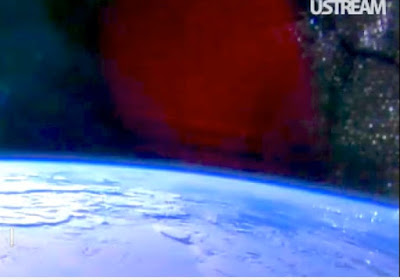
Update on the Red Orb Phenomenon – Nibiru?


ISS Pictures showing huge Reb Orb to right of Sun reflecting off objects or just plain reflections


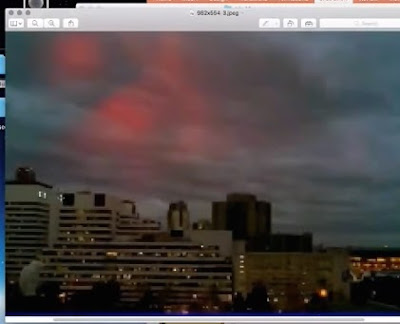
A Remarkable Photo from the Paris Bastille Fireworks showing a RED ORB highlighted from the Electrical Lightning (or lightning generated from the Red Orb being close to our atmosphere) [one regular photo and another zoomed in]


UPDATE: A Few more ISS sitings in our atmosphere

Terror in France, Terror in Turkey, Terror in Tel Aviv, TERROR IN JERUSALEM

TERROR IN FRANCE
TERROR IN TURKEY

TERROR IN JERUSALEM
and let’s not forget Tel Aviv’s Sarona Market


(photo clips from A-7, Haaretz, Times of Israel)


A bomb scare near the Jerusalem light rail shut down much of central Jerusalem Sunday morning.

An Arab passenger boarding the light rail near the intersection of Yafo and King George aroused the suspicions of the train’s security guards, who questioned the man in an attempt to discern whether he posed a threat.

During the conversation, the man claimed he was carrying an explosive device in his bag. Security guards then detained the man, who was handed over to Jerusalem police for interrogation. ArutzSheva


Train Guard Describes How He Captured the Terrorist – "“As I’m watching the entrance to the train, I saw a man wearing a hat, glasses, a knapsack on his back, leaning on the wall and he’s scanning the train station left and right.
I approached the man, and questioned him, I said something wasn’t right.
I asked him to put down his knapsack.
He refused.
I immediately spun the man around, using reasonable force, I placed him against the wall, and checked him.
I took the knapsack off him, and saw a small bag inside. I lifted the bag up and saw the bomb.
I immediately knocked him down onto the ground.


The Nest is in Hebron; time to clean out the Vermin.

15 July 2016

MA TOVU OHALECHA, YAAKOV


MA TOVU OHALECHA, YAAKOV
By Roy S. Neuberger


At a recent chassana, I saw an amazing sight. The chosson was standing under the chuppah with his arm around his father’s waist. I was extremely moved. 

You have to understand the context: the father was born in a different world, thousands of miles from America, in a culture we can hardly imagine. Here they were, father and son, in Jewish-American suburbia, at the son’s chassana. The son wanted his father to feel at ease, so he put his arm around him. This was the greatest moment of the son’s life, and here – under his chuppah – he thought about his father. This spoke worlds about who a Jew is. 

“Ma Tovu ohalecha, Yaakov… How pleasant are your tents, Oh Yaakov, your dwelling places, Oh Israel!” (Bamidbar 24:5) These words emanate from the mouth of Bilaam, one of history’s premier haters of Israel. But even Bilaam was forced to recognize the power of the Jewish home, the dwelling place of the Shechina and the foundation of our strength and the length of our days. When we do Hashem’s will, our enemies are powerless against us; their poison turns to honey. 

We saw pure chessed under the chuppah. I happened to be standing right there, but Hashem sees everything, and – because of such chessed – He turns our enemies’ curses into blessings! 

It is vital to remember this as our world spirals downward. 

Recently, somewhere in New York, I saw a car mount the sidewalk and park in front of a store. The door opened. A “frum Yid” emerged and entered the store. If I had not been swept along by traffic, I would have stopped and said something, but I am still suffering from this scene. 

My friends, do we understand our danger? To begin with, “Dina d’malchusa dina … the law of the land is [binding according to Jewish] law.” (Gittin 10b; Nedarim 28a) But it is more than that. In our present violent world, anything can trigger rage. I remember hearing – and this was years ago – about a driver in Manhattan who accidentally sideswiped someone’s expensive sports car. The driver of the sports car got out and shot him. 

Our world is filled with angry people who are out of control. Some of them are heads of government and some are anonymous, but they are out there. It is best not to provoke them. Hashem will hopefully protect us, but we must act intelligently and remember that we are Hashem’s representatives in this world. All our actions reflect on the Ribono shel Olam. 

This is especially important to remember as we enter the Three Weeks, the most dangerous period of the entire year. We cannot take lightly the hatred that permeates the world. 
“Zeiri said in the name of Rabbi Chanina: the son of David will not come until the arrogant are eliminated from Israel, as it is stated, ‘For then I will remove from your midst those who delight in … arrogance …. And I will leave in your midst a humble and forbearing people, and they will take refuge in the Name of Hashem.’” (Sanhedrin 98a)

Chazal tell us further, “Rabbi Yehoshua ben Levi said: Come and see how great are the lowly of spirit before the Holy One, Blessed is He. For … Scripture regards [one who is humble] as though he brought all the various [Temple] offerings, for it is stated, ‘The sacrifices of G-d are a broken spirit.’ And not only that, but his prayer is not despised [by G-d], as it is stated, ‘a broken and crushed heart, Oh G-d, You will not despise.’” (Sotah 5b)
Chazal tell us further, “Rabbi Elazar was asked by his students what can a person do to be spared the travail of Moshiach? [And he responded,] one should occupy himself in [the study of] Torah and acts of kindness.” (Sanhedrin 98a)
The surrounding culture believes that the louder and more arrogant you are, the more you will accomplish. They believe in screaming and pushing. This is the hallmark of people who do not believe in Hashem. They feel that they must cultivate the attention and adulation of other people in order to succeed. 
But the Yirai Shomayim, lehavdil, those who try to do the will of the Master of the Universe, know that the eyes of Hashem are upon them. Simply acting in the correct way, occupying oneself in “the study of Torah and acts of kindness,” will receive the notice of the Ribono shel Olam and generate His protection. 

My chavrusa, Rabbi Shaul Geller, told me the following story: A demonstration was taking place several years ago in Yerushalayim because of the draft issue. A few talmidim were escorting a rosh yeshiva there, asking him various questions. After they passed Bar Ilan Street, the area became so dense with people that it was difficult to move. However, every once in a while a choshuv-looking person would walk by with an entourage, and his followers would push their way through so that particular rav could get closer to the front. One talmid turned to the rosh yeshiva and said, “If Rebbe wants, we could ‘box out’ a little so Rebbe could get through.”  The rosh yeshiva replied, “There is a Rashi in Eruvin that explains the reason we don’t litter is that it’s not nice. There are certain things that one does not do simply because it is not nice.”

My friends, that is a finely-tuned Torah attitude. That is what we need to survive. We do not need to win public opinion polls or scream or push. We need to do the will of Hashem and understand that He is aware of every nuance of our behavior. We need to occupy ourselves with Torah and gemillas chassadim. Then the curses of our enemies will be turned to brachas and we will see the Bais Hamikdosh standing in our midst! 
May it be soon in our days!

*          *          *          *
Roy Neuberger, author and public speaker, can be reached at roy@2020vision.co.il.

© Copyright 2016 by Roy S. Neuberger

14 July 2016

Anshei Knesses HaGedolah – Part II

The Anshei Knesset HaGedollah

The members of the Great Assembly are designated in the Mishnah as those who occupied a place in the chain of tradition between the Prophets and the earliest scholars known by name.

The Prophets transmitted the Torah to the men of the Great Synagogue. . . . Simon the Just was one of those who survived the Great Synagogue, and Antigonus of Soko received the Torah from him. Haggai, Zechariah, and Malachi received from the Prophets; and the men of the Great Synagogue received from Haggai, Zechariah, and Malachi.[We read this in the beginning of Pirke Avos during the summer months, the time of peril for Am Yisrael (Tammuz and Av)]


[The Anshei Knesset HaGedollah were ‘great’ Rabbis who were endowed with superior knowledge about what happened in prior years, and what was prophetically to happen in our future years. We are now in that era that they foresaw. We are indebted to them for preparing our generation.]

Generation of Ezra


(Continued from here.) The combination of these two passages, which evidently have the same basis, offers another instance of the general assumption that all the members of this body were regarded as belonging to one generation, which included Ezra, while Joshua b. Levi, one of the earliest amoraim, even derived the term "Great Synagogue" from Neh. 9:32. The authors of the prayers restored the triad of the divine attributes introduced by Moses (Deut. 10:17), although Jeremiah (32:18) and Daniel (9:4) had each omitted one of the three attributes from their prayers. "The Great Assembly was so called because it gave the divine attributes their ancient 'greatness' and dignity" (Yoma 69b [with other authorities]; Yer. Ber. 11c and Meg. 74c; Shem-Ṭob on Ps. 19; see also Ber. 33b); although this is merely a haggadic explanation of the old term, it indicates that the Amoraim did not think the Great Synagogue could be any other assembly or council than the one mentioned as the source of the prayers in Neh. ix.; and there are other examples in traditional literature evidencing this view.

In Yer. Ber. 3a (Gen. R. 46, 78.) this objection is raised in regard to a thesis of R. Levi based on Gen. 17:5 and referring to Neh. 9:7: "Did not the men of the Great Synagogue call Abraham by his former name, Abram?" In the name of the men of the Great Synagogue, R. Abbahu (Gen. R. vi.) quotes the words "The heaven of heavens, with all their host" (Neh. 9:6) as an explanation of Gen. 1:17; and the same authority is invoked in a haggadic passage by Abin (Tan., Shemot, i.) in reference to Neh. 9:5 (ib. 2, anonymous), as well as in one by Samuel b. Naḥman (Ex. R. xli., beginning; Tan., Ki Tissa, 14) alluding to Neh. 9:18.

R. Johanan connected the following story with Neh. 10:1–2 (Ruth R. 2:4): "The men of the Great Synagogue wrote a document in which they voluntarily agreed to pay heave-offerings and tithes. This document they displayed in the hall of the Temple; the following morning they found the divine confirmation inscribed upon it." Since Nehemiah himself was a member, Samuel b. Marta, a pupil of Rab, quoted a phrase used by Nehemiah in his prayer (1:7) as originating with his colleagues (Ex. R. 41; Tan., Peḳude, beginning). Ezra was, of course, one of the members, and, according to Neh. 8, he was even regarded as the leader. In one of the two versions of the interpretation of Cant. 7:14 (Lev. R. 2:11), therefore, Ezra and his companions ("'Ezra wa-ḥaburato") are mentioned, while the other version (Cant. R. ad loc.) speaks merely of the "men of the Great Synagogue" (compare the statements made above regarding the pronunciation of the Tetragram). In the targum to Cant. 7:3, in addition to "Ezra the priest" the men mentioned in Ezra 2:2 as the leaders of the people returning from the Exile—Zerubbabel, Jeshua, Nehemiah, Mordecai, and Bilshan—are designated as "men of the Great Synagogue." In the same targum (to 6:4) the leaders of the exiles are called the "sages of the Great Synagogue."

It appears from all these passages in traditional literature that the idea of the Great Assembly was based on the narrative in Neh. 8–10, and that, furthermore, its members were regarded as the leaders of Israel who had returned from exile and laid the foundations of the new polity connected with the Second Temple. All these men were regarded in the tannaitic chronology as belonging to one generation; for this reason the "generation of the men of the Great Synagogue" is mentioned in one of the passages already cited, this denoting, according to the chronological canon of Jose b. Ḥalafta (Seder 'Olam Rabbah xxx. [ed. Ratner], p. 141); 'Ab. Zarah 86), the generation of thirty-four years during which the Persian rule lasted, at the beginning of the period of the Second Temple. As the last prophets were still preaching during this time, they also were included. That prophecy began only at the end of this period, when the reign of Alexander the Great commenced, was likewise a thesis of the tannaitic chronology, which, like the canon of the thirty-four years, was adopted by the later Jewish chronologists (Seder 'Olam Rabbah l.c.; comp. Sanh. 11a), although the view occurs as early as Josephus ("Contra Ap." i., § 8).


Position in Tannaitic chronology

In view of these facts, it was natural that the Great Synagogue should be regarded as the connecting-link in the chain of tradition between the Prophets and the scholars. It may easily be seen, therefore, why Simeon the Just should be termed a survivor of this body, for, according to the tradition current in the circle of scholars, it was this high priest, and not his grandfather Jaddua, who met Alexander the Great, and received from him much honor (see Yoma 69a; Meg. Ta'an. for the 21st of Kislew; comp. Alexander the Great).

It is thus evident that, according to the only authority extant in regard to the subject, the tradition of the Tannaim and the Amoraim, the activity of this assembly was confined to the period of the Persian rule, and thus to the first thirty-four years of the Second Temple, and that afterward, when Simon the Just was its only survivor, there was no other fixed institution which could be regarded as a precursor of the academies. This statement does not imply, however, that such a body did not exist in the first centuries of the Second Temple, for it must be assumed that some governing council existed in those centuries as well, although the statements regarding the Great Synagogue refer exclusively to the first period. The term primarily denoted the assembly described in Neh. 9–10, which convened principally for religious purposes—fasting, reading of the Torah, confession of sins, and prayer (Neh. 9:1 et seq.). Since every gathering convened for religious purposes was called "keneset" (hence "bet ha-keneset" = "the synagogue"; comp. the verb "kenos," Esth. 4:16), this term was applied also to the assembly in question; but as it was an assembly of special importance it was designated more specifically as the "great assembly" (comp. Neh. 5:7, "ḳehillah gedolah").

In addition to fixing the ritual observances for the first two quarters of the day (Neh. 9:3), the Great Synagogue engaged in legislative proceedings, making laws as summarized in Neh. 10:30 et seq. Tradition therefore ascribed to it the character of a chief magistracy, and its members, or rather its leaders, including the prophets of that time, were regarded as the authors of other obligatory rules. These leaders of post-exilic Israel in the Persian period were called the "men of the Great Synagogue" because it was generally assumed that all those who then acted as leaders had been members of the memorable gathering held on the 24th of Tishri, 444 BC. Although the assembly itself convened only on a single day, its leaders were designated in tradition as regular members of the Great Synagogue. This explains the fact that the references speak almost exclusively of the members of the Great Synagogue, the allusions to the body itself being very rare, and based in part on error, as, for example, the quotation from Ab. 1:2 which occurs in Eccl. R. 12:11.

As certain institutions supposed to have been established in the first period of the Second Temple were ascribed to Ezra, so others of them were ascribed to the men of the Great Synagogue. There is, in fact, no difference between the two classes of institutions so far as origin is concerned. In some cases Ezra, the great scribe and the leader of the Great Synagogue, is mentioned as the author, in others the entire body is so mentioned; in all cases the body with Ezra at its head must be thought of as the real authors.

In traditional literature, however, a distinction was generally drawn between the institutions of Ezra and those of the men of the Great Synagogue, so that they figured separately; but it is not surprising, after what has been said above, that in Tan., Beshallaḥ, 16, on Ex. 15:7, the "Tiḳḳune Soferim," called also ("Okhla we-Okhla," No. 168) "Tiḳḳune 'Ezra" (emendations of the text of the Bible by the Soferim, or by Ezra; and according to the tannaitic source [see Bacher, "Ag. Tan." ii. 205], originally textual euphemisms), should be ascribed to the men of the Great Synagogue, since the author of the passage in question identified the Soferim (i.e., Ezra and his successors) with them.


Institutions and Rulings

[Pic Source Wikipedia: Souvenir print from the London tour (circa 1723-1730) of a model by Gerhard Schott (1641-1702) of Solomon's Temple, showing the the Council of the Sanhedrin]

The following rulings were ascribed to the men of the Great Synagogue:

They included the books of Ezekiel, Daniel, Esther, and the Twelve Minor Prophets in the Biblical canon; this is the only possible explanation of the baraita (B. B. 15a) that they "wrote" those books.

The first three books, which were composed outside Israel, had to be accepted by the men of the Great Synagogue before they could be regarded as worthy of inclusion, while the division of the Minor Prophets was completed by the works of the three post-exilic prophets, who were themselves members of that council.

The same activity in regard to these books is ascribed to the men of the Great Synagogue as had been attributed to King Hezekiah and his council, including the prophet Isaiah, with regard to the three books ascribed to Solomon (see also Ab. R. N. i.) and the Book of Isaiah. In this baraita, as well as in the gloss upon it, Ezra and Nehemiah, "men of the Great Synagogue," are mentioned as the last Biblical writers; while according to the introduction to the Second Book of the Maccabees (ii. 13) Nehemiah also collected a number of the books of the Bible.

They introduced the triple classification of the oral law, dividing the study of the Mishnah (in the larger sense) into the three branches of midrash, halakot, and aggadot, although this view, which is anonymous, conflicted with that of R. Jonah, an amora of the fourth century, who declared that the founder of this threefold division of traditional science (see Jew. Encyc. iii. 163, s.v. Bible Exegesis) was R. Akiba (Yer. Sheḳ. v., beginning).

This view is noteworthy as showing that the later representatives of tradition traced the origin of their science to the earliest authorities, the immediate successors of the Prophets. The men of the Great Synagogue, therefore, not only completed the canon, but introduced the scientific treatment of tradition.

They introduced the Feast of Purim and determined the days on which it should be celebrated (see above).

They instituted the "Shemoneh 'Esreh," as well as the benedictions and other prayers, as already noted. The tradition in regard to this point expresses the view that the synagogal prayers as well as the entire ritual were put into definite shape by the men of the Great Synagogue.


Other Sources:
History Crash Course #26: The Great Assembly
Extraordinary sages define the essence of Judaism for the Jews of Israel and the Diaspora.

The Men of the Great Assembly passed decrees that ensured the Jewish peoples’ survival in the post-Temple era down to our times.

Interesting Article:

Reestablishing the Great Sanhedrin and Gerusia? Since the year 358 C.E. when the last Sanhedrin was disbanded, and 425 C.E. when the last rabbinical patriarch Gamaliel VI was executed by Roman emperor Theodosius II, there have been numerous attempts to revive this ancient institution and its leadership positions. While the 3-member Bet Din magistracy survived the long night of Jewish exile, the Great Sanhedrin of 71 sages and Lesser Sanhedrin of 23 sages in each municipality throughout the Land of Israel were left defunct. The honorable roles of Nassi (Prince/President), Av Bet Din (Vice-President), and Chacham (Sage) went unfilled. For 1,813 years the Jewish People were homeless. It has now been 65 years since the Third Commonwealth put an end to that desperate plight.

Moments Before the End – Part I

ITS TIME TO PREPARE FOR THE FINAL GEULAH

This video is from Parshas Naso; however, and this is a big HOWEVER, at the 1:23:28 mark Rabbi Mizrachi takes off into a list of what life will look like right before Mashiach comes. And this list is to a great degree what you currently see all around you here in Eretz Yisrael. According to my estimation, this is truly Moments Before the End. I’m so touched and  filled with awe and also trepidation, even though there should be some Simcha; however, much destruction will occur before we actually reach those very last moments and that is what causes the trepidation.

And Rabbi Mizrachi is yelling this to the Jews in America.

What we were told 2000 Thousand Years Ago by the Great Rabbis will be in the End of Days – in Yemot HaMashiach:

The Anshei Knesset HaGedolah, an assembly of 120 scribes, sages, and prophets, in the period from the end of the Biblical prophets since the early Second Temple period to the early Hellenistic period. It comprised such prophets as Haggai, Zechariah, Malachi (who is Ezra), Daniel, Hananiah, Mishael, Azariah, Nehemiah b. Hachaliah, Mordechai and Zerubabel b. Shaaltiel, among others. Sometimes, the Great Assembly is simply designated as "Ezra and his court of law" (Beit Din) [see Part II]

We Are at The End


Rabbi Shimon Bar Yochai did not want to live in this, the last generation before Mashiach.

All those loser souls from all generations will be brought back to the world for one last chance to do Teshuva.

We are those losers - not a good sign - we did not fix our neshomot - we are here to do that now.

[ME: The 120 in the Israeli Knesset are the extreme opposite to the Great Anshei Knesset HaGedolah]


The Midrash says that our suffering is divided into thirds:

First Third Those who went down to Egypt with the generation of Avraham, Yitzchak and Yaakov until Yetzias Mitzrayim - 400 years

Second Third All the generations of all the years combined and spread over this time period – from Adam to now 5377

Last Third is in our generation, Acharit HaYamim.


Massive amount of haters of Torah – Many apikorsim, prostitution, immodesty.

Tzaddikim will be divided (predicted 2000 yrs ago) All the Hachamim will be damaged

WE ARE WITNESSING ALMOST ALL OF THIS NOW

THE LIST DOESN’T END HERE

WE MUST REALLY TAKE IT TO HEART WHAT THIS IS ALL ABOUT, WE HAVE BEEN WAITING SO LONG AND WRITING ABOUT IT AND WISHING FOR IT BUT ONE MUST BE VERY CAREFUL TO STAY AT THE GATE AND WAIT FOR IT TO OPEN.

THE ONE THING THE RABBI STRESSED THAT WILL HELP US IS TZEDAKA AND CHESSED GIVEN FREELY.

IY”H

13 July 2016

Eretz Yisrael – The Foundation Stone of the World – Part II

“from it the world was created.”


Despite all the construction and digging that have taken place on the Temple Mount over the millennia, it is still a mountain with a summit.

That summit is a rocky projection that Jews call the Foundation Stone (Even ha-Shetiya); Muslims simply call it the Rock (As-sakhrah). In the late sixth or early seventh century a special structure was built over the Rock. It is called the Dome of the Rock and is considered a masterpiece of early medieval Muslim architecture.

The Foundation Stone is not just the highest point of the Mount; it is its spiritual pinnacle. This is why Jewish law strictly forbids any person, Jewish or not, to approach the Stone. We hope that out of respect the reader will be willing to accept our description (which is based on literary sources, not on firsthand experience) and refrain from entering[d1] the Dome of the Rock.

The Talmud tells about the Most Holy Place of the Temple and the Foundation Stone, and explains that “from it the world was created.”[1] The idea of “emanation” from this rock is meant in the spiritual sense, to be sure, and the Kabbalah (Jewish mystical teachings) discusses this matter in detail. In the First Temple the Most Holy Place housed the Ark of the Covenant, which contained the tablets inscribed with the Ten Commandments and a Torah scroll written by Moses. In the Second Temple there was nothing in the Most Holy Place except the Foundation Stone itself. Holiness of place, holiness of time, and holiness of person met here on the holiest day of the year: Yom Kippur. On that day the High Priest, by himself, performed the most exalted Temple service: an incense offering.

A centuries-old tradition common to Jews, Muslims, and Christians living in the land of Israel links the Foundation Stone with the Rock located under the golden dome. However, they are not identical. The Rock is actually much larger, both in width and height, than the Stone described in the Talmud. The reason might be that the Temple floor partially covered the Rock so that only its uppermost part projected above the surface in the Most Holy Place. In that case, after the destruction of the Temple a larger section of the Rock would have been visible.

According to the Muslim chronicles,[2] a Jew who had converted to Islam and who held a high position in Omar’s court showed the Arabs where the Rock was located. The name of this Jew was Ka’ab Abu Ishak ibn Mati. The story has it that the caliph himself went to Jerusalem accompanied by Ka’ab.
“Said Omar to Ka’ab: ‘O, Abu Ishak, knowest thou the position of the Rock?’ and Ka’ab answered: ‘Measure from the wall which is on the Wadi Jahannum so-and-so many ells; there dig, and ye shall discover it’, adding: ‘At this present day it is a dung-heap.’ So they dug there, and the Rock was laid bare. Then said Omar to Ka’ab: ‘Where sayest thou we should place the Mosque, or, rather, the Kiblah?’ Ka’ab replied: ‘Lay out a place for it behind the Rock, whereby you will make one the two Kiblahs, that, namely, of Moses and that of Muhammad.’ But Omar answered him: ‘Thou hast leanings still towards the Jews, O Abu Ishak. The Mosque shall be in front of the Rock [not behind it].” [3]

The passage in the chronicle is certainly not about choosing a place for the Dome of the Rock. It is about building the Al-Aqsa Mosque. The caliph decided to build the sanctuary in front of the Rock, that is, south of it, where the Al-Aqsa Mosque actually stands today. In contrast, Ka’ab (an early interfaith activist, one might say) wished to have it north of the Rock so that Jews and Muslims could pray facing the same direction. A similar story is found in a number of early medieval Jewish sources. For example, here is a passage from a manuscript found in the Cairo Geniza (quoted in Rabbi Zalman Koren’s book[d3] , Courtyards of the House of the Lord): “All Muslims who lived in the city and in the neighboring villages came, and several Jews came along with them. [Caliph] Omar ordered them to sweep up the place where the Temple stood, and every other minute he asked the Jews about the Rock, that is, about the Foundation Stone.”

The most authoritative opinion evidencing the identity between the Rock and the Stone was expressed by Rabbi David ibn Zimra (Ridbaz[d4] ). He lived in the late fifteenth and early sixteenth centuries and was the spiritual leader of the Jews of Egypt for forty years. At a very old age he moved to the land of Israel. He wrote: “It is widely known and beyond any doubt that the Foundation Stone is there, under the Dome, and they call it As-Sakhrah.” The Ridbaz’s[d5] authority was such that his statement was never challenged.

There are some traces of the past on the Stone. For instance, on its western side there is a relatively smooth step, upon which the western wall of the Most Holy Place could have rested. The chisel marks on it are the result of the Crusaders’ practice of chipping pieces off the holy stone and selling them to pilgrims.[4] There is also a much more intriguing rectangular depression in the Stone. According to archeologist Leen Ritmeyer, this could be the very spot where the Ark of the Covenant stood in the First Temple. Beneath the Rock there is a cave used by Muslims as a prayer room.

[1] Babylonian Talmud, Yoma 54b and various other midrashim.

[2] Muthîr al Ghirâm, by Arab chronicler Jamal ad-Din Ahmad, 1351.

[3] Palestine under the Moslems. A description of Syria and the Holy Land from A.D. 650 to 1500. Translated from the works of the mediaeval Arab geographers by Guy le Strange. P.E.F., London, 1890.

[4] Francesco Gabrieli, Arab Historians of the Crusades. Routledge, 1969.

Source: Temple Mount Heritage

12 July 2016

Eretz Yisrael – The Foundation Stone of the World – Part I

THE FOUNDATION STONE OF THE WORLD


*As the ‘foundation stone’ of the world, Eretz Israel is the only stable land mass, and ‘fixed’ point on the whole planet. Everything else is on a floating, tectonic plate that can be very easily destroyed / reshaped by seismic activity.

The tip of the world’s ‘foundation stone’ is located on the Temple Mount, in what will [B”EH] soon be the rebuilt Third Temple. That foundation stone stretches out beneath the whole of Eretz Yisrael, and is the only ‘fixed’ land mass in the world. Every other land mass was created on a movable tectonic plate, and attached to Eretz Yisrael. That’s why Chazal say: Eretz Yisrael is the strong point of the world.
 
(Sources: Yerushalmi Sanhedrin (10:2), 
Radak on Yeshaya (11:9), 
Tehillim 125:1, Devarim 33:27, 
Midrash Cohen) 

. . . . . . . . . . . . . . . . .
* Note: Much of the [...] information […] is drawn from an amazing book called Mysteries of the Creation, By Rabbi Dovid Brown […]. The above article is from  Emunaroma entitled, "A Jewish view of climate change, astrological forces and Nibiru, and how it's all connected to Geula", (however, Nibiru was not discussed): [My Comment: I think there are a few tectonic plates, not “a floating, tectonic plate ….” Many of the other ideas presented are written and expressed eloquently in our Gemora, T”Nach, Midrashim, and Aggados.]

. . . . . . . . . . . . . . . . .

The Even Shetiyah – Kubbat es-Sakhra

The Foundation Stone in known in Arabic es-Sakhra (and the Dome of the Rock, Kubbat es-Sakhra). On the western facade of the Dome of the Rock is the following Arabic inscription, The Rock of the Temple from the garden of Eden. The northern gate of the mosque facing the foundation stone is named the Gate of Paradise, Bab ej-Jinah. On the floor in front of this gate is a stone of green jasper about half a meter square called by the Arabs "the Stone of Eden."

From the Muslim Tradition

The Rock of the Temple is of the stones of the Garden of Eden. At resurrection day, the Kaaba Stone, which is in holy Mecca, will go to the Foundation Stone in holy Jerusalem, bringing with it the inhabitants of Mecca, and it shall become joined to the Foundation Stone, When the Foundation Stone shall see the Kaaba Stone approaching, it shall cry out, "Peace be to the great guest!"

Adam's footprint in stone is said by Muslim guides to still exist in the bedrock of the Macpelah in Hebron.

Even more interesting than the legends concerning the Foundation Stones are the stories about the Abyss which is supposed to lie beneath.

The Zohar Relates

"When the Holy One, blessed be He, was about to create world, He detached one precious stone from underneath His throne of glory and plunged it into the abyss; one end of it remained fastened therein, whilst the other end stood above...out of which the world started, spreading itself to the right and left and into all directions.”

Some of the Jewish sages say that this stone was called Shetiyah, which in Hebrew also means "drinking" because beneath it is hidden the source of all the springs and fountains from which the world drinks its water. An Arab tradition also states that all the fresh waters of the world have their origin under this rock.

In the floor of the small cave (measuring about 14 feet square with a six foot ceiling) under the great foundation stone in the Dome of the Rock is round marble slab closing a well shaft known as "the well of the souls" (Bir al Arwah). A Muslim tradition holds this is the entrance into the bottomless pit, the abyss. The souls of the dead awaiting judgment are said to be audible beneath. The Talmud claims that this is the abyss above the primeval waters of creation and of the Flood.

11 July 2016

Recent Explanatory Images From the Sun and Change in The Earth’s Jet Stream Plus Current Video

In the following series of photos, we see the Sun with its Huge Corona Hole and Mysterious “Things” Darting about the perimeter of the Sun. Steve did a whole video on this and there are no explanations at the present time. I viewed these last week but just got around to posting them.


This is a close-up of one of the objects, which seems to have its own light source.


Our Sun with a huge coronal hole at the bottom


Y
You can see a faint object in lower left corner of this photo


These next photos are of the Earth’s Jet Stream with Differing


This is what the NORMAL Jet Stream (blue thin stream in center of globe) should look like


This is what it looks like now, NOT NORMAL


This is the Southern Pole cool air stream


The following Video explains in-depth what is happening "Upper Jet Stream is Fragmenting”


Next are a number of images submitted, which Steven then puts them through a “Time Lapse” imaging so we can see more clearly exactly what the photo is depicting. 

Stop viewing at 16:50 as Steve goes into cautioning his audience to connect with “their spiritual source” in preparation for “an eventual event.” Steve is a christian, but his focus on communicating with a higher being is appropriate. 

As Jews we go to the Supreme Source of All, Hashem, Who Created all these planets and objects.

Here are some photos from the video:


10 July 2016

Gog U’Magog, the Earth, the Sun, Energy . . . .


Truly Fascinating shiur by Rabbi Mizrachi, but you must listen to the end. He speaks about Gog UMagog, Energy, the Sun, time before and after the End. A very satisfying experience. Some may have heard him speak last year, but it is worth listening again because it is uplifting. I did not hear it last year and very  happy to hear it now.

Why Finland’s Newborns Sleep in Cardboard Cribs


Why Finland’s Newborns Sleep in Cardboard Cribs

At a glance, it seems a strange place to put a newborn: a bit of bedding and a miniature sleeping bag arranged in a cardboard box. 

[T]hat’s the first place that many Finnish infants lay their little heads. And the simple setup is believed to be one reason that  – Finland now has one of the lowest infant mortality rates in the world — 2.52 for every 1,000 births, less than half that of the United States.


Finland provides all mothers-to-be with a baby box


There are efforts to extend the baby-box idea to a wider audience. A hospital in London recently began giving out the boxes on a trial basis. In Minnesota, a nonprofit group distributed the boxes to low-income families, inspiring a proposal being debated by state lawmakers.


Source: NYTimes

07 July 2016

Gateway to the Geulah Shleimah

“UNDERSTOOD ONLY BY HASHEM”
By Roy S. Neuberger

We are not going to be able to unravel the mystery of the Para Aduma. If Shlomo Hamelech could not fathom this, how can we expect to? Nevertheless, I would like to think about this unique mitzvah.

The mitzvah of Para Aduma is very relevant to our world, all the more so because we cannot at this time perform it. It represents the gateway to the Geulah Shelemah. Without it, we will not be permitted to enter the Bais Hamikdosh. In order to participate in the great events which will b’ezras Hashem, soon take place, we must have the Para Aduma, just as our ancestors needed Bris Milah in order to participate in Yetzias Mitzraim.

Perhaps the very mystery of the Parah Aduma is its message. Perhaps Hashem is telling us that, when we go through the purification process prior to the arrival of Moshiach, we will not be able to understand what is happening. It is like the navua of Zechariah which we read the First Day of Sukkos: “Behold, G-d’s awaited day is coming … And it will happen on that day that there will be neither clear light nor heavy darkness. This will go on for a whole day – understood only by Hashem – neither day nor night, but toward evening it will be perceived as light.” It is also like the revelation at Har Sinai, where Hashem said to Moshe Rabbeinu, “Behold, I come to you in the thickness of the cloud ….” (Shemos 19:9) Or like the words of Dovid Hamelech, who said, “When Hashem will reign … cloud and dense darkness will surround him.” (Tehillim 97)

Hashem’s Presence appears to us in this world as darkness. The process of Chevlei Moshiach is extremely obscure. Events will appear to be incomprehensible. As I suggest in my book, Worldstorm, it may be that, as a result of mankind’s continuing rebellion against Hashem, we have wound back Creation to the very beginning, during which the world is described as “Tohu Vavohu … astonishingly empty, with darkness upon the surface of the deep ….” (Bereishis 1:2)

Right now, in our generation, chaos is rapidly increasing. Moral and social standards are becoming unraveled on every level. Practices which were previously accepted, even by non-Jews, as the basis for normal life are being discarded in favor of deviant forms of behavior, which are not only accepted, but institutionalized and incorporated into law.

Readers may remember that, several years ago, I wrote an account of a conversation I had with a highway patrolman near the Goethals Bridge. We were discussing driving habits, and he told me, “Today, crazy is the norm!” He spoke the truth.

The process of reinstating normalcy in the world and bringing about conditions conducive to the reappearance of the Bais Hamikdosh cannot be accomplished “our own way.” When morality in the world deviates past a certain point, it seems that Hashem takes things into His “own hands,” kavayachol, just as He did at the time of the Mabul. The world did not understand why Noach was constructing the teva. Apparently, the way in which Hashem will enable us – who are so steeped in tumah – to enter the Bais Hamikdosh is completely beyond our ability to comprehend.

Who could have predicted that Dovid Hamelech would arise from Moav or from Yehudah’s encounter with Tamar? This was incomprehensible and unpredictable. Even Shmuel Hanovi was taken by surprise. But it happened! So will it be with the coming of Moshiach ben Dovid.

There are those who think that they can rush or push the Geulah by forcing themselves onto Har Habayis. I am afraid they will end up like those described in Parshas Shelach, who tried to enter Eretz Canaan after the debacle of the Miraglim. Moshe warned them, “It will not succeed. Do not ascend, for Hashem is not in your midst… But they defiantly ascended the mountain” (Bamidbar 14:41-44), with disastrous consequences.

My friends, we have to learn from the mystery of the Para Aduma: we do not understand how the Geulah will come – “It is understood only by Hashem” – and so we must play by Hashem’s rules, and only by His rules. The process must play out according to His timetable. We cannot rush it or prevent it. There are things which are revealed and things which are hidden. Foolish mankind wants to believe that we can outsmart the Torah. That is a recipe for suicide. The Para Aduma is coming to teach us that we have no clue as to the workings of Shomayim, except for that which Hashem has enabled us to understand.

“It will be that when all these things come upon you, the blessing and the curse that I have presented before you, then you will take it to heart among the nations where Hashem, your G-d, has dispersed you…. For this commandment … is not hidden from you and it is not distant … it is not in heaven … rather the matter is very near you…. (Dvarim 30:1ff)

Our avoda is to follow the Torah as it has been given to us and not try to ascend to Heaven to “outsmart” Hashem. Even before we open the Torah, we have an obligation in derech eretz, and we don’t have an easy time with that! We cannot unravel the mysteries of the Para Aduma, but we can follow Hashem’s will: “To love Hashem, your G-d, to walk in His ways, to observe His commandments, His decrees and His ordinances. Then you will live and … multiply and Hashem, your G-d, will bless you in the Land to which you come to possess it.” (Dvarim 30:15-16)

May these blessings come upon us soon in our days!

* * * *
Roy Neuberger, author and public speaker, can be reached at roy@2020vision.co.il.

© Copyright 2016 by Roy S. Neuberger

"By the way, we (my wife and I) do public speaking and will IYH be in Israel for about ten weeks starting after Tisha B’Av, just in case you are interested. Our daughter in Israel handles the arrangements.”  If anyone is interested in having Roy and his wife give a presentation, please email me and I can give you the contact info. Neshama

The Critical Difference Between the Reform Movement and Secular Jewry

The Critical Difference Between the Reform Movement and Secular Jewry
Rabbi Baruch Efrati
This is a position paper written for the Zion and Jerusalem Conference to take place next week on the topic of the Reform Movement and Israel (printed in Arutz Sheva)


In contrast to the words of individual rabbis who called on Israel to cooperate with the Reform Movement, our message is a call to stand firm and declare, in the immortal words of the Prophet Isaiah "Your plans will not be realized nor will your words be upheld, because G-d is with us."

Let us explain our stand on the matter.

Historically, G-d fearing Jews approached the Zionist Movement in one of two ways. Some turned their back on the Zionists because most of the new movement's adherents were not religious. They placed prime importance on negating anything secular, thereby protecting their communities, but also ignoring earthshaking Jewish national developments. Rabbi Kook, zts"l, did not respond that way, but sought to join the Zionists, to be involved and try to raise the spiritual level of our people, of every sector, by imbuing their endeavors to return to Zion with an aura of holiness.

Rabbi Kook spoke and wrote often on the uniqueness of Israel and on the obvious and revealed Redemption that was taking place before his eyes. Non-observant people of integrity, he said, do not come here to be free to lead a decadent and erring way of life, but because unconsciously, they long for the truth and Divine light found in the Torah. Ideological secularism is being revealed in confused souls whose hidden inner desire is the light of the Almighty, the light they lacked in the exile before our nation's coming back to life here. The secular world is one of impurities. but in its depths there is a spark of holiness that keeps it alive – and that allows the appearance of the true Jewish soul to come to the fore.

This viewpoint led Rabbi Kook to have faith in the tikkun that the secular Zionists would experience, and, he believed that even those most adamant in their antagonism to the Torah would return once the vibrant and holy light of the Torah was apparent to them - and in the end, they would contribute much to the revival of G-d's Word in Israel. We believe in the Almighty Who has stretched out His hand to redeem His people, he said, and all the vicissitudes of Israeli culture are attempts to reach spirituality, to search for the grandeur of a G-d without limits - and will, eventually, lead to tikkun.

In contrast to Rabbi Kook's loving and empathetic approach to the non-observant Israeli, he castigated the Reform Movement - not Reform Jews - vehemently in his writings, and wrote the following letter to American Jewry, which he saw as fated to disappear because of the activities of this movement:

B"H, The Holy City of Jerusalem (may it be rebuilt speedily in our time), 1922 
To our brothers, to the beloved and holy congregations in the United States of America and Canada, may G-d protect them, those who seek to keep the word of G-d, believe in the heritage of Moses, the Written and Oral Law, G-d's Covenant with the people of Israel: 
Greetings to you from the Holy Mount of Jerusalem.
My dear Brothers,
The state of true Judaism as it is upheld by the faithful in your midst has been brought to my attention and it breaks my heart. The despoilers have come, those who have destroyed the vineyard of the Lord of Hosts, and are even now are causing many to abandon the G-d of Israel and His eternal Torah – They, the inventive Reform leaders to whom many, even from within the faithful religious camp have been drawn unwittingly, uproot the foundations of the world that are intertwined with the basic principles of Torah and Judaism. 
And these cracks are in the wall of sanctity, evidenced in the words that are publicly uttered, the actions that leave their mark on entire congregations, including the way synagogues are constructed and what customs they follow – and they go from evil deed to evil deed, one sin leads to another, destruction brings on more destruction, to the point where they have laid their hand on the holy mesorah, in place from the beginning of time, that mandates separate prayer sections for women and men. 
We know what happened to the first despoilers who began destroying and abandoning the original Jewish tradition and heritage, we know what happened to them, that almost all of them are lost to the people of Israel, having left the faith along with their offspring. Many of them have been swallowed up without a trace by the non-Jewish world, and those who have not yet been lost are like an atrophied limb festering in the nation's body, devoid of Torah and the light of true Judaism. Our eyes see this and are filled with longing for them, while the best of them regret the sin of their fathers once they see the spiritual ruin that it spawned.

There is no way to justify granting the Reform Movement the slightest entry, and neither legal nor public legitimacy in the state of Israel.

Why did the sainted Rabbi Kook have such a vastly different attitude to Reform Jewry than the one he evinced towards secular Jews? Why didn't he seize the opportunity to call for cooperation with the Reform Movement the way certain rabbis do today? Why did he refer to them using sharp names such as: "despoilers"" "destroyers of the vineyard," "wreckers," "uprooters of eternal foundations," "instigators," "cut off from the house of Israel," "atrophied limbs in the body of the people" – epithets that the rabbi never used in describing anyone except the Reform Movement and Jews who converted to become heretical Christians?

The answer is crystal clear. The secular world and the observant world live side by side. The non-observant have chosen wrongly, the Rabbi felt, but they are open to tikkun because of the light spilling over from the religious world existing beside them and their sacrifices for the Jewish people. The secular Jewish world does not want to take over the religious world from a theological point of view, but to live beside it – hence, the possibility of influencing that world, listening to its hearts' desires, elevating its holy sparks to their heavenly source. The secular are actually non-observant Orthodox, they do not present an alternative organized religion that turns transgressions into an ideology intended to take the place of the Torah. They have not invented a made up religion but are in the midst of a process where secularism is withering and faith is blossoming, as one can see over the last few years in which there is constant strengthening of ties to Torah, baruch Hashem.

In contrast, the Reform Movement has a "progressive" ideology that wishes to exchange the Oral Law's G-d-given message. It does not wish to ask questions about the Torah but to create a religious empire of its own. It has an organized theology that grants legitimacy to transgressions and turns them into religion. There is no possibility of living side by side, but a theological battle over who will lead the nation. Our dialogue is thus one between enemies, not lovers. It is either we or them, the holy or the ritually impure and their ideological rebellion against the Oral Law.

Isaiah describes idol worship as gaining strength because it justifies man acting according to his baser desires. When a man bows to idols, he is really bowing to himself and his desires, turning his sins into an ideology and sanctioning them a priori as religious activities. Idols were always lascivious or murderous in their design, and an example of this is Ashtor, a nude female holding weapons of war and symbolizing lust and bloodshed. The idol is really the worshipper himself, he alone decides what constitutes ethical behavior with no heavenly agent above him. The lust for idol worship is so pervasive, that people would sacrifice their own children to prove their loyalty, but really succeeded in proving that they were true to their basest instincts and not to a Supreme Being who restrains and sets limits for human behavior.

The Reform Movement originated in a form of heresy that wished to establish a new religion based on plundering that which is holy. It is a model that does not speak of raising one's level of purity in order to accept the Torah, but uses ideological terms to lower the Torah to accept our desires and the modern liberal western ethos (some of whose beliefs are beneficial to man in themselves). It does not sacrifice children, but it sacrifices G-dly values in the same fashion, and that is just as grave.

The Reform Movement wishes to accomplish exactly what its name says, to effect a critical change in the foundations of Torah, putting man in the center to define truth and falsehood, good and evil. It denies G-d's revelation to us through prophecy and the Holy Temple, denies the eternal life he planted in us through the Torah commandments. Its goal is not to strengthen efforts to achieve a higher plane, as Israel's non-observant Jews do, but to lessen and remove the sanctity of Jewish tradition. It does not believe that Jews are the Chosen People and wants the world to unite, as do the Christians, under one faith – that of belief in man, his desires, his wants. The Reform Movement is against a biological definition of the Jew, instead emphasizing his personal feelings and self-definition.

This is not Judaism

Confronting this heresy, there are no compromises and no cooperation. Just as no one would join forces with the man who steals his wife and wrecks his home, so there can be no joining of forces with a movement that wishes to do the same to our home, the State of Israel, to our Jewish identity, to our Torah-true values.


As I have written before, this movement made a strategic decision to infiltrate the State of Israel from the United States and to change the balance of power in Israeli society so that the religious world would not continue to be a place of commitment to mitzvot and the guidance of Heaven, but, become, instead, a folkloristic tradition. The movement donates large sums of money to yeshivas and other organizations and it is hard to stand strong in the face of this temptation, so that one can already discern their devious influence on rabbis and concepts in the religious Zionist world.

This has to be the rule: individual Reform Jews are our brothers and we will welcome them warmly as part of the Jewish people (those that actually are Jewish), and we are prepared to explain their mistaken view of Judaism to them if they wish to listen. We see that among them are those who do return to the true Judaism and we welcome them with love. However, we will wage an everlasting war against their ideological movement, a war that does not affect our relations with individual members There is no way to justify granting the Reform Movement the slightest entry, and neither legal nor public legitimacy in the state of Israel.

Two shining luminaries, the High Priest of Modern Orthodoxy, Rabbi Joseph Dov Soloveitchik and the High Priest of Religious Zionism, Rabbi Avraham Hakohen Kook, were unequivocal about this issue and came out strongly against legitimacy and cooperation with this misguided and destructive movement. At the same time, they told us to love every Jew. We, their students and the students of their students must grasp the folds of their garments and not swerve from the path of our Torah, even if we have to pay a high price – literally and figuratively - for our principled stand.


. . . . . . . . . . . . . . . .
Translated from Hebrew by Rochel Sylvetsky

A Discussion of Morality and the Future of Am Yisrael in Eretz Yisrael

This Is Absolutely HEARTBREAKING…