The following is from - https://dailyzohar.com/tzadikim
Yehudah was the son of Yaakov (Jacob) the Patriarch and Leah the Matriarch. He is the founder of the Tribe of Yehudah. He was born on the fifteenth of Nissan, and he died at the age of 119 (Yalkut Shimoni, Shemot 162).
"Yehudah, your brothers will acknowledge you (Genesis 49:8). All your brothers will be called by your name, Jew" (Bereisheet Rabbah 98:6).
Yehudah was not ashamed to confess in the episode of Tamar. What was his reward? He inherited life in the World to Come (Sotah 7b).
Who caused Reuven to confess in the episode of Bilhah? Yehudah who set an example (ibid.).
Anyone who blesses Yehudah for convincing the brothers to sell Yosef into slavery rather than slay him is a blasphemer. Of this it is written, He who blesses the profit-seeker blasphemes God (Psalms 10:3). The profit-seeker is Yehudah, who said, "What gain will there be if we kill our brother?" (Genesis 37:26) (Sanhedrin 6b).
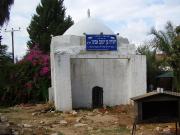 Because Yehudah has imposed a ban upon himself by saying, "If I do not bring Benjamin back to you, then I will have sinned against you for all time" (Genesis 43:9), throughout the years that Israel was in the desert, Yehudah's bones rolled about in their coffin until Moshe came and prayed for mercy, in effect, absolving him of the ban, whereupon his limbs reassembled. But he was not admitted to the heavenly Yeshivah until Moshe prayed, "Bring him to his people" (Deut. 33:7). Once in the heavenly Yeshivah, Yehudah did not know how to discuss Halachah with the Sages until Moshe prayed, "His hands shall contend for him" (ibid.). Still, Yehudah's halachic (law) decisions were not legally correct, so Moshe prayed, "You shall be a help against his adversaries" (ibid.) (Sotah 7b). Because Yehudah has imposed a ban upon himself by saying, "If I do not bring Benjamin back to you, then I will have sinned against you for all time" (Genesis 43:9), throughout the years that Israel was in the desert, Yehudah's bones rolled about in their coffin until Moshe came and prayed for mercy, in effect, absolving him of the ban, whereupon his limbs reassembled. But he was not admitted to the heavenly Yeshivah until Moshe prayed, "Bring him to his people" (Deut. 33:7). Once in the heavenly Yeshivah, Yehudah did not know how to discuss Halachah with the Sages until Moshe prayed, "His hands shall contend for him" (ibid.). Still, Yehudah's halachic (law) decisions were not legally correct, so Moshe prayed, "You shall be a help against his adversaries" (ibid.) (Sotah 7b).
Yehudah was buried in the city of Binyamin opposite Bethlechem,
(Sefer HaYashar, end of Yehoshua).
"King and Warrior"
On three occasions Judah spoke before his brothers, and they made him king over themselves (Bereisheet Rabbah 84:17).
Yehudah merited rulership over Israel (Sotah 37a).
Why did Yehudah merit kingship? Because he confessed in the episode of Tamar or, according to another opinion, because he saved his brother Yosef from death, as it is written, "What gain will there be if we kill our brother?" (Tosefta Berachot 4:16).
Why did the Holy One, Blessed is He, see fit to give the kingship to Yehudah of all the brothers? The letters of His Name are inscribed in Yehudah's name, and the Holy One, Blessed is He, honors His Name. The letter daled of Yehudah, which is not in His Name, stands for King David, who bound himself to His Name more than all the people of the world. Thus it is written, They shall seek Hashem their God and David their king (Hoshea 3:5) (Zohar 1:89b).
Yaakov taught his sons not to seek higher rank. By fulfilling his father's teaching, Yehudah merited kingship (ibid. 2:258b).
Reuven ruled over Israel in Egypt. When Reuven died, rulership was given to Shimon, when Shimon died, it was given to Levi. When Levi died, they sought to give rulership to Yehudah, but a Heavenly Voice rang out and said, "Let him be until his time comes." Then, in the days of the Judges, Hashem said, "Yehudah shall go up" (Judges 1:2) (Bamidbar Rabbah 13:8).
"A lion cub is Yehudah" (Genesis 49:9). This teaches that he was given the might of the lion and the audacity of its cubs (Bereisheet Rabbah 98:7).
They, the Romans, received a tradition from their fathers that Yehudah slew Esav (Esau) (Yerushalmi Gittin 5:7).
When the Patriarch Yitzchak (Isaac) died, Esav, Yaakov, and all the Tribes went to bury him. Yaakov and his sons sat down and began to weep in the Cave of Machpelah, but out of respect for Yaakov, the Tribes left the cave so that they would not see their father weeping. Then Esav slipped into the cave, for he thought, "Now that my father has died, I will slay Yaakov." When Yehudah saw that Esav had gone in after Yaakov, he thought, "Now Esav will slay Father!" He entered the cave just as Esav was about to kill Yaakov and slew Esav from behind. Why did he not slay him from the front? Because Esav's face resembled that of Yaakov. Therefore, his father Yaakov blessed him, "Your hand is at your enemies' nape" (Genesis 49:8) (Shocher Tov 18:32).
May the merit of the tzaddik Yehudah ben Yaakov Avinu protect us all, Amen.
|


2 comments:
I don't understand. It is known that Esav was killed by the son of (not sure, Dan) who was deaf and saw the quarelling of the brothers when they saw Esav trying to get that portion of the cave instead of Yaakov. The deaf son didn't understand what was going on and he killed Esav and Esav's head rolled into the cave.
Please clarify.
Thank you for your question. As I learned it, yes it was a hush from Shevat Dan that lobbed a blow to eisav’s neck, but that being Eisav, Yehuda finished him off. HERE IS WHAT A SEARCH SAID: “The classical story from the Talmud Sotah 13a and the Midrash actually centers on Hushim, the deaf son of Dan, who struck the fatal blow. When Esau blocked the entrance to the Cave of Machpelah claiming the last burial plot was his, the brothers were forced to wait for Naphtali to return to Egypt to fetch the deed. Upon realizing his grandfather's body was being disgraced, Hushim (who couldn't hear the negotiations) struck Esau in the head with a club, decapitating him so violently that his eyes popped out and rolled into Jacob's lap.” “However, there is another fascinating, alternate tradition in the ancient texts—such as the Sifre Deuteronomy (348) and the Midrash Psalms (to Ps 18.41)—which explicitly credits Judah (Yehuda) with killing Esau. This tradition links to Jacob's blessing of Judah in Genesis 49:8: "Your hand shall be on the neck of your enemies." In these accounts, it is Judah who ultimately struck and killed Esau during the burial dispute.” Do your question brings this out! TY
Post a Comment