30 September 2026

TERROR ATTACK IN THE SKIES: Co-pilot stabs captain - Israel-bound flight FZ1073
NETANYAHU BREAKS SILENCE: Pilot “Tried To Crash The Plane With Everyone On Board”; PM Salutes “Heroes” Who Intervened [yeshiva world news]
SAFELY HOME: Passengers Exit Rescue Flight At Ben Gurion Airport As Emergency Personnel Stand By [yeshiva world news]
Passengers aboard the rescue flight are seen exiting the aircraft after it landed safely at Ben Gurion Airport, where emergency personnel were waiting.
Original Report:
Shalom Pollack: October - November Tours
Tuesday October 13

Sabastia, the biblical city of Shomron ( the ancient capital of the Kingdom of Israel ) and "Shuva Yisrael", a new hilltop farm in the area
Depart from the Inbal Hotel at 9:00 and return at approx 6:00
We will travel in a comfortable coach with special protective windows.
A local specialist will guide us through this monumental site.
(The above adds considerably to the cost of organizing this unique tour)
The ancient capital of the Kingdom of Israel is where our kings and prophets made their marks in Tanach, and is also the focal point of international polemics and politics today.
Surprised?
The "United Nations Educational, Scientific and Cultural Organization (UNESCO)" has accepted the Palestinian Authority's claim that it is an ancient "Palestinian heritage site" and designated it as such.
The only mark that the local Arabs have made on the unique biblical site is vandalism, theft of antiquities, illegal construction, and lots of trash.
The last time I was there, before COVID, there were prominent Palestinian flags and PA armed men. The IDF accompanied us to this cherished Tanakh site.
It was surreal.
Still, I was blown away by the archaeological finds and Tanakh stories at our fingertips.
Today, for the first time, the government has invested millions of shekels to preserve and secure the site.
The government encourages visits again after many years of its neglect.
I expect a more relaxed and satisfying experience this time, IH.
We will have lunch in Homesh (bring your own), one of the villages and yeshivot destroyed by Ariel Sharon in 2005 and rebuilt this year by our indomitable heroes.
We will visit a new hilltop community nearby, "Shuvu Yisrael," where we will share our love and support for the young pioneers there.
On this day we shall renew the old and build the new.
Reservations: Please, no later than Oct. 6, as I must commit to suppliers and services.
350 shekels
shalompollack613@gmail.com
shalompollack613@gmail.com
-------------------------------------------------------------------------------------------------------
Tuesday, November 3
After a three-year hiatus, due to the war, we will renew our annual visit to the world-famous "Agmon Hahula" bird sanctuary in the Hula Valley.
Each year at this time, vast numbers of migratory birds fly from Russia to Africa. The lush Hula Valley, with its shallow ponds and grasslands, provides the perfect resting and feeding grounds that give them the strength to continue their flight.

Birds and nature lovers near and far come to witness this amazing phenomenon that lasts for a few weeks.
The sanctuary authorities say that November 3 is a perfect date.
In addition, the best time to witness the amazing sights is just before sundown.
I have reserved the perfect date and time with the local expert to guide our tour in a special vehicle that will take us to the normally restricted part of the park.
We will take full advantage of the special moment.
Departure from the Inbal Hotel at 1:00 pm
and return approx. 8 pm
We will stop along the way for toilet breaks and snacks, but not an official lunch or supper. You should be "after lunch" by departure time.
We will daven mincha and maariv.
Please register before October 28 to ensure your seat on this annual experience.
350 shekels
shalompollack613@gmail.com
מחזה נדיר בסוכת דרעי: "התורה תשרוד בלעדיהם!" | הנאום המסעיר של ראש הישיבה הליטאי הגרש"ב סורוצקין
מעמד רווי עוצמה וביטחון בהשם: ראש ישיבת 'עטרת שלמה', הגאון רבי שלום בער סורוצקין שליט"א, נשא הבוקר נאום תקיף, מרטיט ומלא השראה בסוכת יו"ר ש"ס ח"כ אריה דרעי בירושלים, בהשתתפות ראש העיר משה ליאון, רבנים ואישי ציבור.
ופעילות הציבורית והבחירות אינן פוליטיקה אלא "משימה רוחנית עילאית וסגולה אדירה של זיכוי הרבים להרבות כבוד שמיים". צפו בדברים חוצבי הלהבות! A powerful and inspiring address: The Rosh Yeshiva of 'Ateret Shlomo', Hagaon Rabbi Shalom Ber Sorotzkin shlit"a, delivered a passionate and uncompromising speech this morning in the Sukkah of Shas Chairman MK Aryeh Deri in Jerusalem, alongside Mayor Moshe Lion, prominent Rabbis, and community leaders. Addressing the budget cuts and hostility toward the Yeshiva world, the Rosh Yeshiva proclaimed: "Yes, there is persecution... but anyone looking closely sees unprecedented growth in Torah study! Did they think they hold up the Torah world? The Almighty has shown that the Torah world survives with them or without them – they are merely losing the ultimate merit!". He concluded by reminding the audience that working for Torah causes is not mere politics, but an exalted spiritual mission of Kiddush Hashem
רה שורד איתם ובלעדיהם, והם רק מפסידים את הזכות!".
עוד הדגיש כי ה
בדבריו התייחס ראש הישיבה לסערת קיצוץ התקציבים ורדיפת עולם התורה:
"נכון, יש רדיפה... אבל מי שמסתכל רואה התפתחות עצומה של עולם התורה בכמות ובאיכות שלא נראתה מעולם! חשבו שהם מחזיקים את עולם התורה? הקב"ה הראה שעולם התופעילות הציבורית והבחירות אינן פוליטיקה אלא "משימה רוחנית עילאית וסגולה אדירה של זיכוי הרבים להרבות כבוד שמיים". צפו בדברים חוצבי הלהבות! A powerful and inspiring address: The Rosh Yeshiva of 'Ateret Shlomo', Hagaon Rabbi Shalom Ber Sorotzkin shlit"a, delivered a passionate and uncompromising speech this morning in the Sukkah of Shas Chairman MK Aryeh Deri in Jerusalem, alongside Mayor Moshe Lion, prominent Rabbis, and community leaders. Addressing the budget cuts and hostility toward the Yeshiva world, the Rosh Yeshiva proclaimed: "Yes, there is persecution... but anyone looking closely sees unprecedented growth in Torah study! Did they think they hold up the Torah world? The Almighty has shown that the Torah world survives with them or without them – they are merely losing the ultimate merit!". He concluded by reminding the audience that working for Torah causes is not mere politics, but an exalted spiritual mission of Kiddush Hashem
הרב אליהו בן שלמה זלמן מוילנא זצ"ל
Rav Eliyahu of Vilna zt"l
הרב אליהו בן שלמה זלמן מוילנא זצ"ל
Tishrei 19 , 5558
Known As: Vilna Gaon, Gra
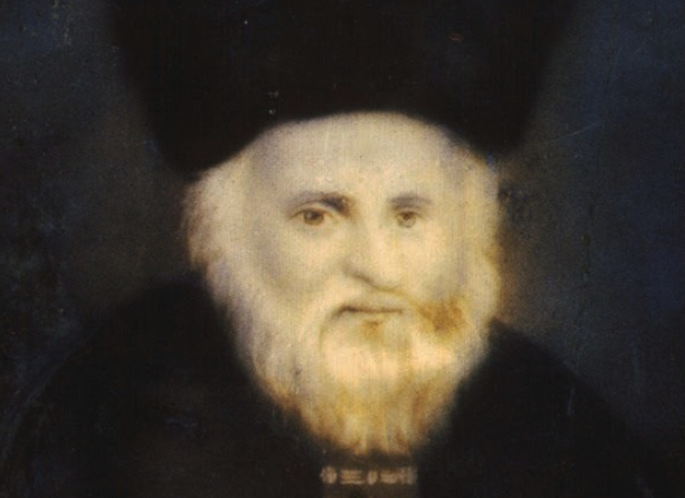
Tishrei 19, 5558 / 1797
Father's Name: Shlomo Zalman
His Father Rav Shlomo Zalman’s Yichus
more by the Gaon of the following titles, at https://nertzaddik.com/tzadik-info/2863/:
Rav Shlomo was the son of Rav Yissacher Ber, son of the pious Rav Eliyahu Chassid. The Vilna Gaon was named after this illustrious great-grandfather. Rav Eliyahu Chassid was the son of Rav Moshe Kramer, AB”D Vilna, and the son-in-law of Rav Pesachya, son of Rav Moshe Ravkash of Vilna who authored Be’er HaGola.
The Vilna Gaon was the bechor in his family. His brothers were: Rav Avrohom Ragaled, author of Maalos HaTorah; Rav Yissacher Ber of Vilna; Rav Meir of Yanishock; Rav Moshe, posek and maggid of Padzeleva near Vilkomir.
At age six, he studied both with a teacher and with his father. By age seven, he studied under the author of Pnei Moshe on the Yerushalmi, and at a young age became both friend and study partner with Rav Aryeh Leib AB”D Tshechnovitz.
At age eleven, on Simchas Torah, he suddenly remembered that he had vowed to complete the tractates of Zevachim and Menachos by the end of the chag, and he had not even begun. So, he sat down and learned both tractates all night long. Rav Michel of Datneve was present and then fell asleep, but he awoke around midnight to find the young Eliyahu going strong, having gotten up to page 50 of Zevachim. Rav Michel, astounded, asked him how he managed to learn 50 pages of Talmud in just two hours! He tested him on a few difficult passages and found the young illui’s understanding to be complete and thorough. The young Eliyahu had fine answers to all his questions.
When Rav Michel returned at dawn, he found that Rav Eliyahu had begun Menachos and had already finished almost half the tractate. He tested him again and blessed him. The Gaon had completed both tractates Zevachim and Menachos before Shacharis. By age 12, the Gra was already aiding those much older than him and even rebbeim in understanding the complex laws of sanctification of the new moon. The Aliyos Eliyahu records that by age eight he had mastered various astronomy texts. His text of Sefer Yetzirah was complete before his bar mitzvah. It is known that at this age he even attempted to create a golem, but, from Heaven, they held him back from doing so (it otherwise seems that might have succeeded!)
He slept no more than two hours a day, and for the duration of 30 years, not longer than 30 minutes at a single stretch. At age 20 he went into self-imposed exile. He wandered from place to place wrapped in tallis and crowned in tefillin. From Berlin, Lisa, and everywhere he went, stories emerged about the Gaon that were wondrous.
Stories about His Self-Imposed Exile
The Vilna Gaon once entered a beis medrash and sat to study there as an unknown guest. He learned for a stretch and then he noticed an old woman approach a holy-looking blind man who sat wrapped in tallis and tefillin. She brought the man a small afternoon meal, and as he ate, he remarked about the melodious voice of a stranger-- a new voice that he did not recognize. “Surely this traveler is a righteous individual. Please invite him to the meal; surely he is hungry and needs to eat.”
The woman invited the Vilna Gaon, but he demurred as he was worried that his hosts would not have enough food for themselves. Realizing his reluctance, the old man explained: “My good wife works at the miller, and there, the flour mill is constantly grinding the wheat. As payment for her services, the owner allows her to collect all the powdered flour that spills over in the mill and so we have plenty and to spare!” The man seemed filled with joy over this, and dined on the gruel made of this flour and water as if it was a great meal.
Afterwards, he invited the Gaon to his home for Shabbos. Again, the Gra hesitated, and again the blind man reassured his guest, “My wife also works at the slaughterhouse and she helps the butcher by plucking all the feathers off the fowl. As payment, he gives her the feet and the head. Therefore, we have plenty of meat for Shabbos, and all the poor are our guests. That Shabbos the Vilna Gaon saw how the old blind man and his elderly wife shared together with their poor guests their Shabbos meal of watery flour gruel with chicken legs and heads. To them, it was like the feast of royalty. All his life, the Vilna Gaon said that he was jealous of the good character and attributes of that elderly couple and how they were happy with their lot, claiming that he wished he was as content as they were.
Another incident induced the Gaon to express the wish that he was as humble as another. During one of his journeys of self-imposed exile, he met a rav of a small town . It was a cold and rainy night and the rav invited the Gaon to sleep at his home. The rav led his guest of undisclosed identity to a comfy bed and covered him with a sheepskin. The Gaon feared that the blanket could be considered shatnez according to a stringent approach in the Rambam and slipped the warm cover off. The rav came to check on his guest and found the cover had slipped off. He covered his guest a second time and went back to his studies. Again, the Gaon slipped off the suspect blanket and again the rav checked on his guest and found him uncovered. “Now please my good man,” the Rav urged, “I want you to be warm! Do try and see that the cover doesn’t slip off; I cannot keep coming to interrupt my learning to cover you again and again.” The Gaon was impressed by the rav’s humility in that he would come back to cover him again and again. Seeing that the rav’s penchant for hachnasas orchim was so strong, he shared the true reason why he removed the blanket explaining why he was that he worried that it was shatnez.
The rav listened and simply brought a different blanket that was less heavy but also less problematic. From this exchange, however, the Gaon’s cover was blown. His explanation of the halachah revealed that he was a Torah scholar. That morning, when the rav sought out his scholarly guest, the Gaon had already left. With his identity revealed, the Gaon fled, but what remained with him always, was the jealousy he felt over the humility that the rav displayed.
In the introduction to Peas Hashulchan, it is told that on his way home he hired a coach and promised the driver to pay him extra for waiting. The Vilna Gaon wished to finish davening the Tefillas Shemoneh Esrei. Yet, while the Gaon stood silently davening, the driver hurried the horses and ran off with all the his possessions. The Gaon came back home empty-handed.
In תק"ה, the Gaon returned to Vilna and studied Torah in poverty and asceticism. He was accustomed to study secluded alone in nature. No one but his wife Chana, the daughter of Rav Yehuda of Kidan, knew where this location was. She saw to it that he was undisturbed, but fed and taken care of. She passed away 5 Kislev תקמ"ג.
The Vilna Gaon authored a number of seforim; the tally among his various students and disciples varies from 55 to some 72 works. Not all of them were printed. The Gaon had the custom to revise seforim with his many glosses and emendations. Rav Chaim of Volozhin testified that before he amended a text of the revealed Torah, such as from Tannaim or Amoraim of the Talmud, he only did so if he first had tested that it agreed with 15-20 sugyos. In amending the hidden Torah, he only made changes where he found no less than 150 sound reasons for doing so.
Among the students mentioned below, was Rav Yisroel of Shklov, author of Tekalin Chaditin, Peas Hashulchan, and Nachla Umenucha. Rav Yisroel served and studied under the Gaon for half a year and was with him for the final 20 days before Rav Eliyahu’s passing. Rav Binyomin and Rav Yisroel of Shklov who prepared and published the Vilna Gaon’s commentaries on the following works: Shulchan Aruch; Orach Chaim; Yore Deah; Mishnas Eliyahu; glosses on tractate Shekalim (Rav Yisroel); a commentary to Pirkei Avos; emendations to the text of the minor tractates prepared by Rav Menachem Mendel of Shklov, the sefer, Tzuras Haaretz V’tavnis Habayid --also by the Rav Menachem Mendel; a commentary to the Pesach Haggadah; and Sefer Yetzirah by Rav Menachem Mendel of Shklov as well.
Rav Meir of Vilna also studied several years under the Gaon and authored a commentary called Eliyahu Rabba based on what he heard and learned on mishnayos Seder Taharos. It is known that whatever the Gaon taught in Taharos was only after he clarified that it was true according to the secrets of Torah as well.
In תקנ"א, when he was advanced in age, the Gra grew ill. Instead of going to doctors, he turned to the famed Dubno Maggid for help through the agency of the Maggid’s insightful stories and parables.
In תקנ"ד, at age 74, Russian soldiers attacked Vilna. They surrounded the city intending to capture the city from the Poles, and on the 21st of Tammuz, around thirty Jews lost their lives to the gunfire of the invaders. On Tu b’Av the fighting intensified, and when the sounds of battle grew near, the Jews fled. Men women and children congregated together for safety in the Great Synagogue. The Vilna Gaon approached the bimah, opened the doors of the aron kodesh and recited Tehillim, chapter 20: “Hashem save us during troubled times” seven times. Suddenly, a loud blast was heard and the gathered Jews were stunned when a direct hit was made onto the roof of the shul. The Gaon cried out, “Batel! Batel!” The bomb failed to explode and even after quiet returned to the city the shell remained there on the roof as a sign of the miracle.
In תקנ"ו, he again took ill and called the Dubno Maggid and once more was healed. In תקנ"ח, on the eve of Yom Kippur he called his children and grandchildren to his side and blessed them one last time. As Sukkos approached, he gathered his strength despite the severity of his illness, so that by the second and third days of Chol Hamoed Sukkos he was still able to fulfill the mitzvos of lulav and esrog with great fervor and simchah. It is believed that the Gaon passed away on the 19th of Tishrei at age seventy-eight while still holding the arba minim in his holy hands. (Summary based on Ruach Eliyahu)


SHOCKING: Beneath TEMPLE MOUNT They Found a SEALED GATE
Something extraordinary is hidden beneath the Temple Mount. In this video, we go deep underground to examine ancient Second Temple remains, restricted tunnels, ongoing excavations, and a passage that was sealed with concrete after attempts were made to dig farther toward the Temple Mount.
Along the way, Mosab Hassan Yousef, MK Ohad Tal and Yishai Fleisher discuss the Temple Mount, the Dome of the Rock and the future of the Jewish Temple.
But the most fascinating question comes from what may still lie beyond the sealed passage: could the treasures of the Temple — perhaps even the Ark of the Covenant — still be hidden there?
We also look at original Herodian construction, 2,000-year-old ritual baths that still function today, a hidden synagogue near the Temple Mount, the destruction carried out by the Romans, and the extraordinary archaeological evidence still being uncovered beneath Jerusalem.
Source videos:
• UNDERNEATH the Real Location of the Second...
• Touched God's Mountain under the Temple—di...
Featuring Yishai Fleisher, Mosab Hassan Yousef and MK Ohad Tal.
Join the Parsha Inspired WhatsApp Channel for new videos and updates.
@RabbiAronSokol
@YishaiFleisherTV
@IsraelMyChannel
29 September 2026
שואבים רוח הקודש - מעמד הקבלת פני רבו ומלחמתה של תורה בראשות רשכבה"ג מרן הגאון רבי דב לנדו שליט"א
Thousands of French Jews Are Leaving France — Here’s Where They’re Going
France has the largest Jewish population in Europe, and right now thousands are leaving it every year. This documentary traces the numbers behind that exodus, from the Toulouse school shooting and the Hyper Cacher siege to the accelerated departures after October 7, and unpacks the two distinct strains of antisemitism pushing families out. It follows where they're actually going: Israel's French-speaking enclaves in Netanya and Ashdod, Montreal's French Jewish community, and growing enclaves in Miami and New York, and why each destination appeals to a different kind of family. Along the way it examines what France itself stands to lose as this community, central to its intellectual and cultural life for generations, continues to shrink. It closes on the open question of whether France can still reverse a trend that politicians have started to acknowledge but not yet solve.
CHAPTERS
0:00 Intro
0:32 The Numbers
2:10 What's Driving Them Out
3:53 Destination Israel
5:42 Destination Canada
6:47 Destination United States
8:16 What France Is Losing
9:38 Closing Thoughts
🍋🌴 Birkat Kohanim at the Western Wall today. Hundreds of thousands of people gathered today.
Jerusalem Walker
Why We Pray To Return To Our Houses in Eretz Yisroel & Not Just The Rebuilding of the Temple
The Amazing Lomdus of the Brisker Rav and the Vilna Gaon
סוכות תשפ'ז בחצרות הקודש חלק ב: תיעוד ענק ומיוחד מרגעי ההוד בחצרות האדמו'רים והרבנים
Several celebrations within one video
Subscribe to:
Posts (Atom)
